
Designers: Craft Affiliate Programs on Craftsuprint, 3 Month Roadmap
For independent designers selling printable craft downloads, craft affiliate programs mean marketplace earning schemes: commission and royalty structures where you get paid every time your PDF pattern, card kit or design sells. The fastest route in is simple: list one well-made file on a marketplace such as Craftsuprint, capture buyer emails from day one, and build from there.
TL;DR:
- Marketplace fees, including commissions and payment processing, can consume at least 18% of a $5 sale, significantly affecting profit margins.
- Listing files should be in multiple formats like PDF, SVG, and PNG, with exports in both A4 and US Letter sizes, to meet diverse buyer printing needs.
- Building a buyer email list with free offers and bundling related designs can boost repeat sales and address low-margin issues from fixed listing fees.
- New sellers typically earn little initially, but experienced pattern sellers can reach between $2,000 and $20,000 monthly after years of catalogue growth.
- Choosing a platform like Craftsuprint offers niche-focused exposure, community support, and recognition programs that benefit hobby crafters and emerging designers.
Table of Contents
- What are craft affiliate programs for marketplace designers?
- How do you assess a marketplace before signing up?
- How do you set up a listing that actually sells?
- What actually increases earnings from marketplace listings?
- What should you realistically expect to earn?
- Why choose Craftsuprint: how the platform supports designers
- How do you track whether your listings are actually earning?
- How do you build lasting relationships with marketplace platforms?
- What legal issues matter for craft affiliate marketing programs?
- Which platforms and marketplaces suit printable craft designers?
- What criteria separate a good program from a poor one?
- A three-month roadmap for designers starting today
- Start selling your printable designs on Craftsuprint
- Sources
- FAQ
What are craft affiliate programs for marketplace designers?
Here, “craft affiliate programs” means something specific: the earning structures marketplaces offer designers who upload and sell their own printable work, not the referral schemes bloggers use to promote other people’s products. If you make card kits, paper patterns or printable templates, this is the model that pays you directly for your own designs.
Most marketplaces work on a straightforward commission basis. You upload a file, set a price, and the platform takes a cut, usually a percentage of the sale plus a payment-processing fee, when a buyer checks out. Some platforms layer in incentive schemes on top, rewarding designers who hit sales thresholds or contribute regularly to the catalogue. Payout cadence varies, but weekly or monthly cycles are standard once you clear a minimum balance.
File formats and delivery expectations matter more than most new sellers realise:
- PDF for print-ready patterns and instructions, exported at 300 DPI
- SVG for anything destined for a cutting machine
- PNG for digital-only decorative assets
- Both A4 and US Letter sizing, since buyers print at home on whatever paper their printer takes
Digital files carry no per-unit production cost, which is the appeal, but they are not a “set it and forget it” income stream. You still handle listing upkeep, customer questions and periodic updates long after the file first goes live.
How do you assess a marketplace before signing up?
Before you upload a single file, work through what the platform actually costs you and what it lets you keep control of.
- Map the fee stack. Listing fees, marketplace commission and payment-processing charges all bite into a sale before you see a penny. On a modest $5 printable, fees alone can take roughly 18% or more once processing costs are added.
- Read the licence terms. Check what rights you retain, what buyers are permitted to do with the file (personal use only, or commercial too), and whether resale or redistribution is restricted.
- Check discoverability. Does the platform have built-in search traffic, categorisation, or promotional tools, or are you solely responsible for driving buyers to your listing?
- Confirm support and dispute handling. Find out how refunds are processed and who fields buyer complaints, since this affects both your time and your margin.
Craftsuprint’s Craftdirect.com alternatives comparison is a useful starting point if you are weighing several marketplaces side by side.
Pro Tip: Read the refund policy before the licence terms. A generous no-questions refund window sounds buyer-friendly, but it can quietly erode margin on low-price printables if you have not budgeted for it.
How do you set up a listing that actually sells?
Getting a first listing live is mostly a checklist. Getting one that converts takes a bit more care.
- Create your account and verify payout details. Set up your seller profile and confirm the payment method the platform will use to pay you, before you upload anything.
- Prepare multi-size exports. Save your design as a 300 DPI PDF in both A4 and US Letter, and keep an editable source file if buyers might request personalisation.
- Write a README. Include printing instructions, paper recommendations and basic troubleshooting; this single document meaningfully reduces refund requests and support emails.
- Build the listing itself. Clear title, honest mockups showing the printed result (not just a screen render), and a description that states exactly what the buyer receives.
- Price to test, then adjust. Launch at a modest price point to gather early reviews and sales data, rather than guessing at a premium price with no track record.
- Treat the listing as a trial. Test one product, watch how it performs, then decide whether to expand the format into a bundle or a series.
Craftsuprint’s guide on why selling craft designs online works walks through the reasoning behind several of these choices in more depth.
What actually increases earnings from marketplace listings?
Once a listing is live, the designers who earn meaningfully more are doing a handful of things consistently, not chasing one clever trick.
- Bundle related designs. A themed set of five card fronts sells for more than the sum of five separate low-price listings, and it lifts your average order value without extra design work.
- Capture emails from day one. Offer a free design as a lead magnet, then use that list to promote new releases directly rather than relying on marketplace search traffic alone.
- Test Pinterest as a traffic channel. For sellers of printable goods, Pinterest can account for 40 to 60% of external referral traffic, making it one of the highest-leverage channels to test early.
- Offer licence tiers. A personal-use price and a separate, higher commercial-use price let small business buyers pay more for the right to resell finished products made from your design.
Because fixed listing and processing fees eat harder into small-ticket sales, bundling and upselling are usually more effective margin levers than simply raising a single item’s price. Craftsuprint’s piece on social sharing for crafters covers how to turn casual browsers into a following worth marketing to.
The strongest long-term asset any designer builds isn’t a bestselling listing. It’s the buyer list behind it, because repeat buyers moved to your own mailing list cost you nothing in marketplace commission on the next sale.
What should you realistically expect to earn?
New sellers often earn very little in the first few months, and that’s normal rather than a sign the model doesn’t work. Building a catalogue takes time, and a single listing rarely carries a shop.
At the other end of the scale, established pattern sellers with deep libraries can earn between $2,000 and $20,000+ a month, though that range reflects years of catalogue growth, not a typical first quarter.
Ongoing costs to budget for:
- Customer support time answering printing or file questions
- Periodic file updates as software or printer standards shift
- Bookkeeping and tax record-keeping on every payout
- Marketplace and processing fees on every single sale, however small
Why choose Craftsuprint: how the platform supports designers
Craftsuprint is built specifically for hobby crafters and the designers who supply them, which matters when you’re deciding where to put your first listing. The platform’s Gold Star programme gives designers a structured way to earn recognition and income from their catalogue, alongside categorised listings (card kits, paper patterns, mini kits) that put your work in front of buyers already searching for that exact type of project.
For anyone starting out, Craftsuprint’s own onboarding resources remove a lot of the guesswork:
- The How to sell digital crafts: your 2026 guide walks through account setup and listing basics step by step.
- Advertising and promotional tutorials cover how to get a new design in front of the right audience within the platform.
- Community features, weekly freebies and contests give new designers visibility without needing an existing following.
Platform-specific creator resources like these genuinely shorten the learning curve compared with working it out alone.
How do you track whether your listings are actually earning?
Most marketplace dashboards, Craftsuprint’s included, give you sales counts, revenue and payout history at a glance. That’s the baseline. What separates designers who improve their earnings from those who plateau is what they do with that data.
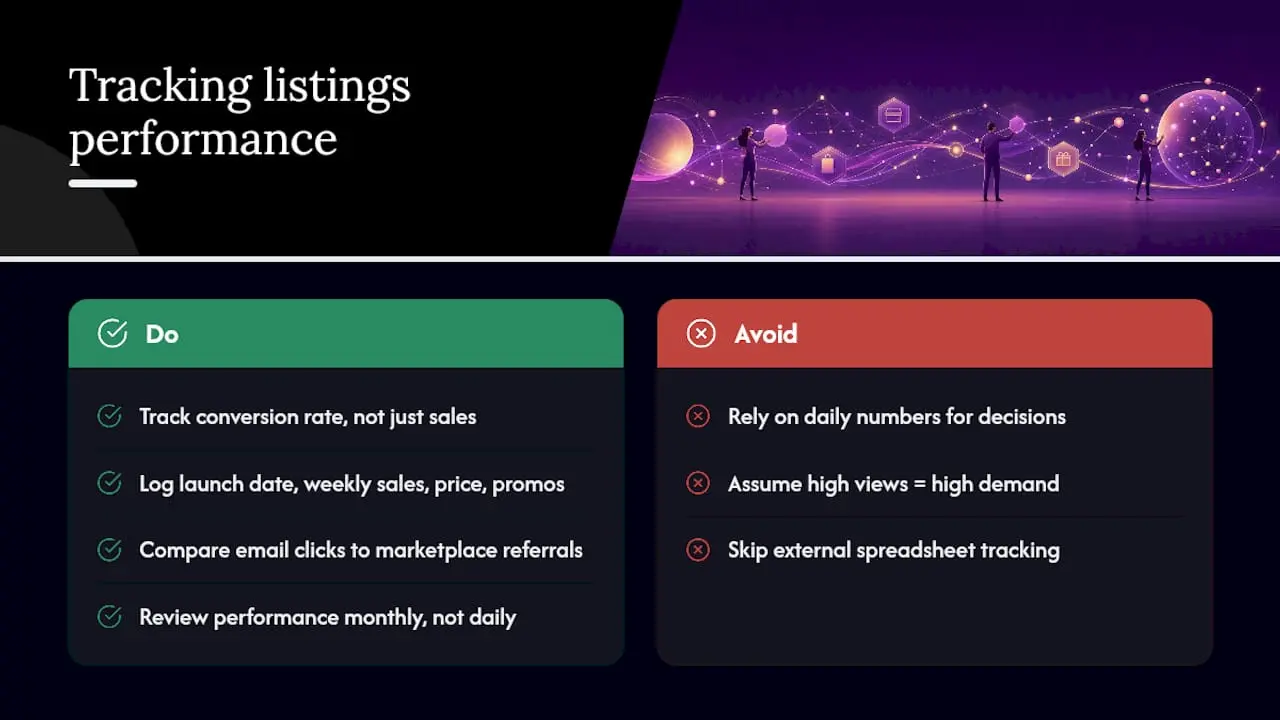
Track conversion, not just sales volume. If a listing gets plenty of views but few purchases, the problem usually sits in the thumbnail, the price, or the description, not the design itself. If it gets few views at all, the problem is discoverability or your external promotion, and no amount of listing tweaking will fix that.
Keep a simple spreadsheet outside the platform too. Log each listing’s launch date, price changes, and any promotional push (a Pinterest pin, an email blast) alongside the sales figures for that week. Over a few months, patterns emerge: maybe your card kits sell steadily but your printable planners spike only around January, or a particular bundle consistently outsells its component parts.
For email marketing, most standard providers report open rates and click-throughs on the specific product links you send, which tells you whether your list actually converts to sales or just reads your newsletter. Match that against your marketplace’s own referral data if it’s available, since some platforms show you where traffic originated.
The habit that matters most is reviewing monthly, not daily. Daily numbers on a low-volume shop swing wildly and tell you very little; a month of data actually shows a trend.
How do you build lasting relationships with marketplace platforms?
Treat the platform less like a landlord and more like a long-term business partner, because the designers who do best on any marketplace tend to be the ones who show up consistently rather than uploading once and disappearing.
Respond to buyer questions and support tickets quickly. A prompt, helpful reply to a printing query often turns into a positive review, and reviews are one of the few signals that genuinely influence whether a new buyer trusts your listing enough to purchase.
Update your files when formats age. A pattern that only exports in one size, or a PDF that doesn’t account for newer printer defaults, quietly loses sales over time even if nothing about the design itself has changed.
Contribute regularly rather than in bursts. Platforms and buyers both notice designers who add new work every few weeks against those who vanish for months, and consistent activity tends to keep your existing listings visible in search and recommendation feeds.
Read platform update notices and policy changes properly. Marketplaces adjust fee structures, licensing language and promotional tools periodically, and missing a change can mean an unpleasant surprise on a payout or an accidental licence breach.
What legal issues matter for craft affiliate marketing programs?
Two things need attention here: your own intellectual property, and your buyers’ rights to use what they purchase.
Protect your original work first. Uploading a design to a marketplace doesn’t automatically forfeit your copyright, but check the platform’s terms carefully. Most reputable marketplaces let you retain ownership while granting the platform a licence to host and sell the file. Confirm this before uploading anything you’ve invested real design time in.
Write licence terms buyers can actually understand. State plainly whether your printable is for personal use only or whether commercial use (a small business printing and reselling cards made from your template, for instance) is permitted, and at what price tier. Vague licensing is one of the most common sources of buyer disputes on printable marketplaces.
Be careful with fonts, clip art and stock elements. If your design incorporates a font or graphic element you didn’t create yourself, check its own licence permits commercial redistribution inside a paid product. This is a frequent, easily avoidable mistake among new sellers.
Keep proper income records. Marketplace payouts count as taxable income in the United Kingdom regardless of how small or irregular they are, and HMRC expects self-employment income to be declared. A simple monthly log of payouts, fees and expenses makes this far less painful at tax time than reconstructing a year of sales after the fact.
Which platforms and marketplaces suit printable craft designers?
Not every marketplace fits every kind of design, and the right choice usually comes down to your specific niche and how much control you want over pricing and presentation.
Specialist craft marketplaces, Craftsuprint among them, cater specifically to card makers, paper crafters and hobby designers, meaning your listing sits alongside buyers already looking for exactly that kind of project rather than competing in a general marketplace against every category imaginable. That focus tends to matter more for conversion than raw traffic volume.
General handmade and digital goods marketplaces offer broader reach but put your printable pattern next to jewellery, clothing and unrelated digital products, which can dilute discoverability for a niche craft item.
Your own website or shop, run alongside a marketplace presence, gives you full pricing control and no commission cut, but you carry the entire burden of driving traffic yourself. The most sustainable approach for most designers combines the two: use a marketplace’s built-in audience to acquire buyers, then use email capture to bring repeat buyers to your own checkout over time, where margins are better.
Craftsuprint’s own comparison of marketplace alternatives is worth reading if you’re deciding where to place a specific catalogue.
What criteria separate a good program from a poor one?
Judge any marketplace against a short list of concrete factors rather than general reputation.
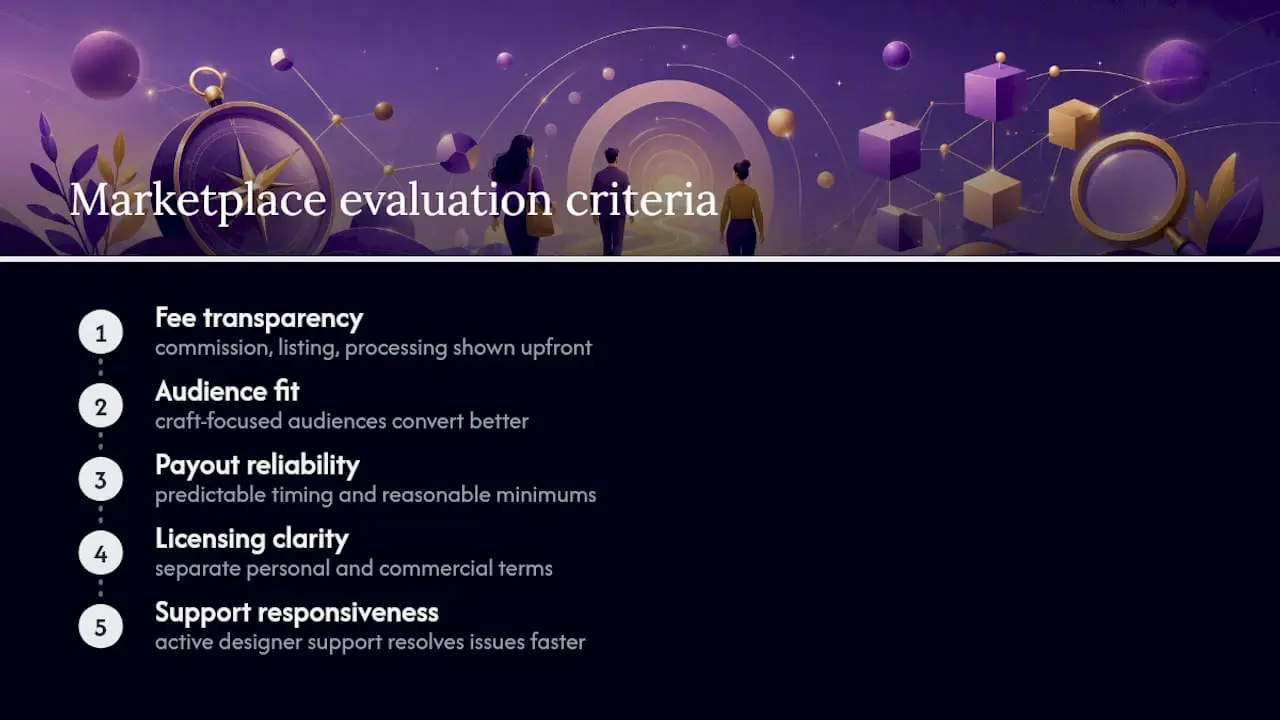
Fee transparency comes first. A platform that clearly states its commission, listing and processing fees upfront is easier to plan around than one where charges appear only after your first payout.
Audience fit matters more than raw size. A marketplace with a smaller but genuinely craft-focused audience will often convert better for a card kit than a huge general marketplace where your listing gets lost.
Payout reliability and cadence should be predictable. Check how often payouts run and what the minimum threshold is, since a high minimum can trap small early earnings for months.
Licensing clarity protects both you and your buyers. Look for platforms that let you set explicit personal-use and commercial-use terms rather than a single blanket licence that doesn’t match how your buyers actually want to use the file.
Support responsiveness affects your time, not just your buyers’ experience. A platform with active designer support resolves disputes faster and leaves you less exposed when something goes wrong with a payment or a download.
A three-month roadmap for designers starting today
Month one: pick one niche product, something you already know how to make well, and get it listed properly on Craftsuprint. Resist the urge to upload ten mediocre designs when one strong one will teach you more.
Month two: build a simple lead magnet, a free mini design or template, and offer it in exchange for an email address. Pick one promotional channel, Pinterest is the obvious starting point for printable work, and commit to it rather than spreading effort thin across five platforms.
Month three: look honestly at what sold and what didn’t. Rewrite the listing copy on your weakest performer, and build your first bundle from whatever combination of designs actually moved.
This sequence isn’t glamorous, but it’s the order that avoids the most common beginner mistake: uploading a large catalogue before you’ve learned what your specific audience actually buys.
— Rob
Start selling your printable designs on Craftsuprint
Craftsuprint gives independent designers something a general marketplace can’t: a buyer base that’s already searching specifically for card kits, paper patterns and printable craft projects, not scrolling past them on the way to something else.
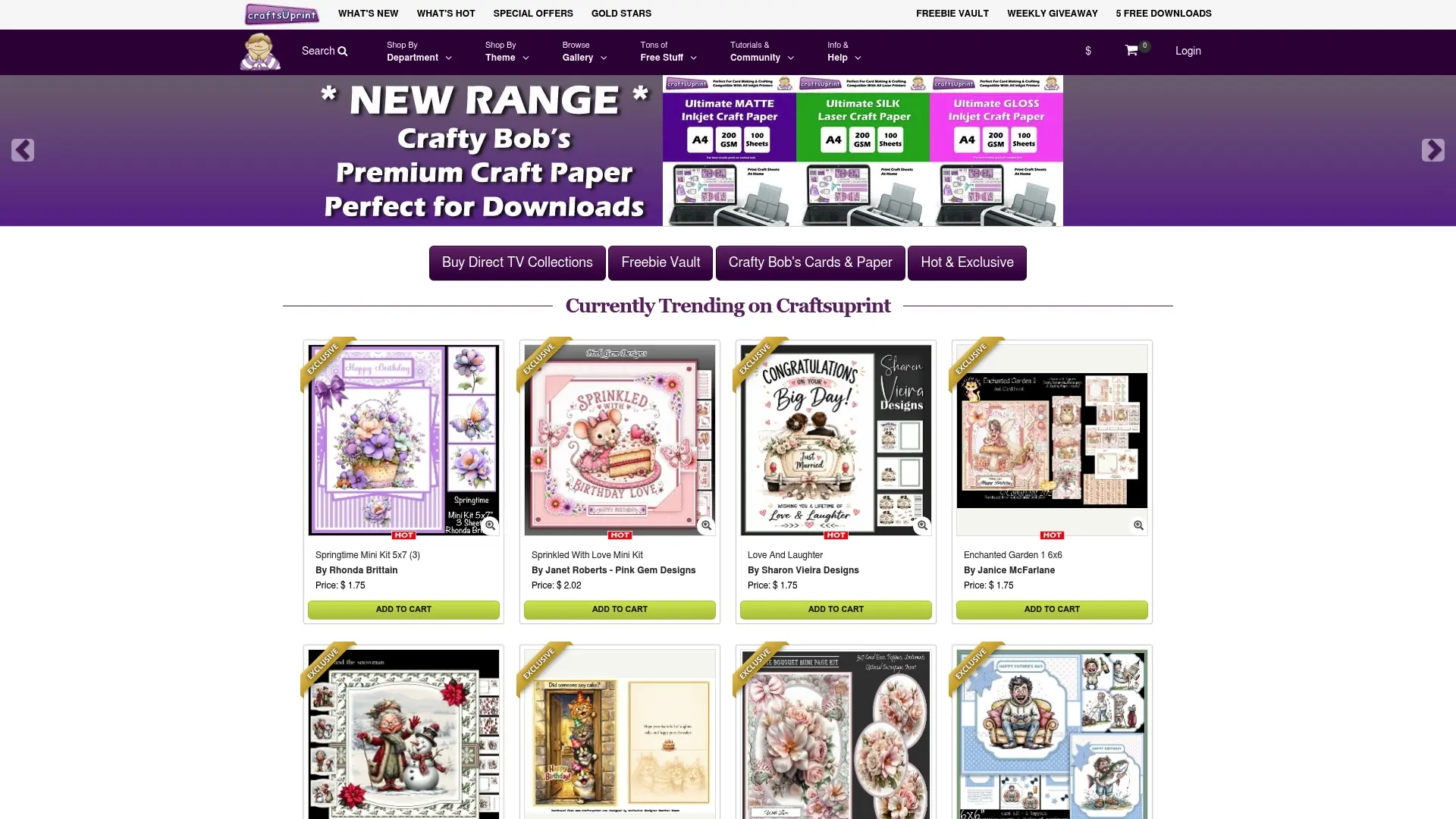
That focus is the real advantage here. Instead of competing against unrelated product categories for attention, your listing sits directly in front of hobby crafters who already know what they’re looking for. The platform’s Gold Star programme adds a way to build recognition and income as your catalogue grows, and the categorised structure means new designs don’t get buried the way they might on a broader marketplace.
If you’re ready to get your first file live, start by exploring the Create & Craft downloads page to see how the programme works in practice, or check the Create & Craft membership offer for current designer benefits. Either page is a straightforward next step towards turning your first printable into an actual listing.
Sources
Before you list your first file, two resources are worth ten minutes each: Craftsuprint’s guide to selling digital crafts for platform onboarding, and How to Make Printables to Sell for file preparation and fee mechanics.
- How to Build Recurring Income with Digital Downloads (SVG, DXF, STL Files) | Craftgineer Blog
- How to Make Printables to Sell: Beginner’s Guide
- Selling Patterns on Etsy: 2026 Guide | Insight Agent
FAQ
What is a marketplace earning program for craft designers?
It’s a commission or royalty structure where a platform pays you a share of each sale when a buyer purchases your printable design, card kit or pattern.
How much do marketplace fees typically take from a sale?
On a small-ticket printable, listing, transaction and payment-processing fees combined can take roughly 18% or more of the sale price.
What file formats should I prepare before listing?
Export print-ready PDFs at 300 DPI in both A4 and US Letter, plus SVG files if your design suits cutting machines.
Can I really earn a full income from printable downloads?
Established sellers with large pattern libraries have reported monthly earnings between $2,000 and $20,000+, but that reflects years of catalogue building, not a typical first few months.
Does Craftsuprint offer support for new designers?
Yes, Craftsuprint provides onboarding tutorials, a Gold Star incentive programme, and categorised listings designed to help new designers reach hobby crafters faster.
Should I sell on a marketplace or my own website?
Most designers do best combining both: use a marketplace to reach buyers already searching for craft designs, then capture emails to bring repeat buyers to your own checkout over time.