
The role of promotional offers in craft sales
TL;DR:
- Strategic promotional offers help craft businesses attract new customers, encourage loyalty, and boost seasonal revenue. Timing, framing as value rather than discounts, and measuring effectiveness are essential for long-term success. Avoid over-reliance on discounts to protect brand value and build meaningful customer relationships.
Promotional offers in craft sales are defined as targeted incentives, including discounts, bundles, loyalty rewards, and limited-time events, that drive customer acquisition and repeat purchases while supporting long-term brand value. For craft business owners and independent designers, the role of promotional offers in craft sales goes well beyond a simple price cut. Used strategically, promotions attract new buyers, convert browsers into loyal customers, and generate the kind of seasonal revenue spikes that keep a small creative business financially healthy. Platforms like Craftsuprint, email marketing tools, and pop-up shop formats have all become central to how artisans structure their promotional activity in 2026.
Which types of promotional offers work best for craft business sales
Not every promotional mechanic suits every craft business, and choosing the wrong type can cost you more than it earns. The five most effective formats for craft retailers are discounts, product bundles, loyalty programmes, first-time buyer offers, and email sign-up incentives. Each serves a distinct purpose and carries its own trade-offs.
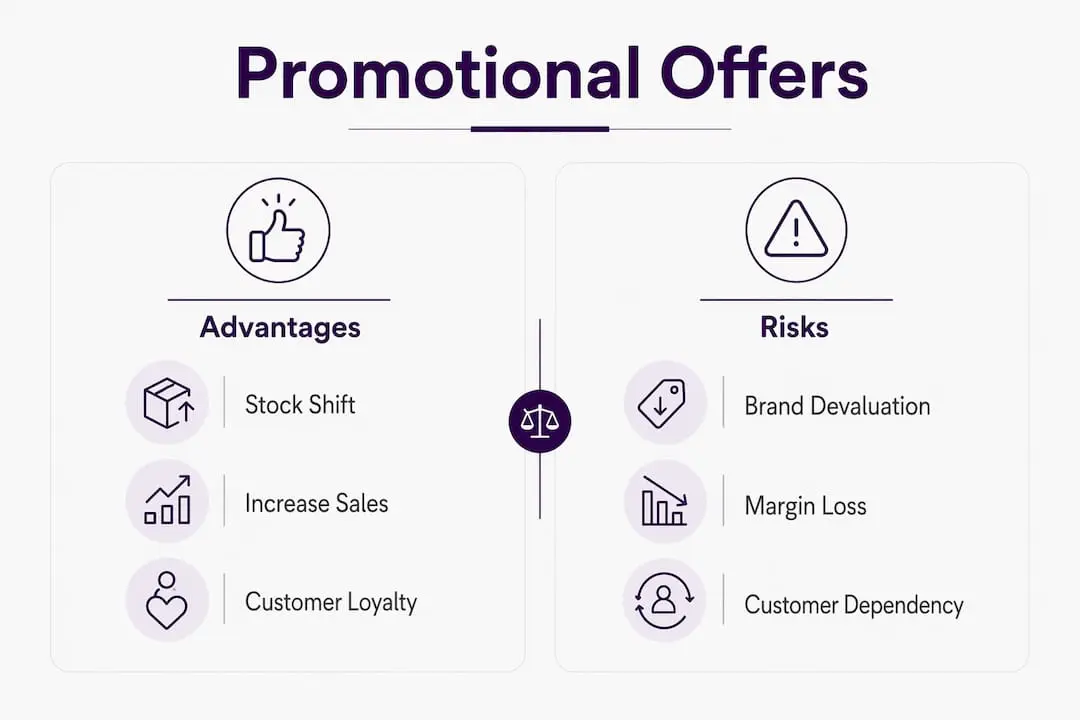
Discounts are the most familiar format and the most misused. A well-placed percentage reduction on a slow-moving product line or a seasonal clearance can shift stock and attract new buyers. The risk is frequency. Constant discounting risks brand devaluation and pulls in bargain hunters rather than the loyal, values-aligned customers most craft businesses actually want.
Product bundles solve a different problem. Instead of reducing the perceived value of a single item, bundles increase the average order value by pairing complementary products. A card-making designer, for example, might bundle a themed paper kit with a matching sentiment sheet and a tutorial download. The customer perceives greater value; the designer maintains full price integrity on each individual item.
Loyalty programmes are among the most measurable promotional tools available. Loyalty programmes boost repeat business by roughly 40% on average for craft retailers. That figure represents a significant compounding effect over a year, because a customer who returns four times spends far more in total than one who visits once during a sale. Stamp Design 4U’s guide to loyalty stamp schemes illustrates how even simple physical or digital stamp cards can formalise this relationship and make repeat purchases feel rewarding rather than transactional.
First-time buyer offers and email sign-up incentives occupy a subtler space. The most effective version of an email sign-up offer is not a discount at all. Email signups framed as community invitations rather than discounts preserve brand value and avoid training customers to expect a price reduction every time they engage. Offering early access to new designs, a free downloadable template, or a behind-the-scenes tutorial positions your brand as a creative community rather than a discount shop.
| Type | Key advantage | Customer impact | Brand risk |
|---|---|---|---|
| Percentage discount | Shifts stock quickly | Attracts new and lapsed buyers | High if used constantly |
| Product bundle | Raises average order value | Increases perceived value | Low when priced correctly |
| Loyalty programme | Drives repeat purchases | Builds emotional connection | Very low |
| First-time buyer offer | Reduces purchase hesitation | Converts browsers to buyers | Low if framed as welcome gift |
| Email sign-up incentive | Grows owned audience | Creates ongoing engagement | Low if framed as community access |
Pro Tip: Frame your email sign-up reward as “exclusive access” rather than a discount code. You attract customers who value your creative community, not just your prices.
How does timing affect the success of seasonal promotions?
Timing is the variable most craft sellers underestimate. Seasonal peaks account for 60 to 70% of annual craft business revenue, which means the majority of your yearly income is decided by how well you prepare for a handful of concentrated windows. Getting the timing wrong by even a week can mean missing the peak entirely.
The key insight from campaign data is that launching promotional campaigns early before the season builds momentum and brand authority before competitors flood the market. A Christmas card-making promotion launched in late September reaches customers while they are still planning. The same promotion launched in December competes with every other seller at the noisiest moment of the retail calendar.
Here is a practical scheduling framework for craft businesses across the year:
- January and February. Use post-Christmas clearance to move seasonal stock, then pivot to Valentine’s Day and Mother’s Day preview campaigns. These are strong periods for card-making downloads and paper craft kits.
- March to May. Spring and Easter represent a secondary peak for many craft categories. Launch limited-edition seasonal designs and consider a short capsule run to generate urgency.
- June to August. Summer is traditionally quieter, but it is the ideal time to build your email list, test new product bundles, and prepare autumn assets. Customers acquired in summer convert well during the Q4 rush.
- September to November. This is your primary promotional window. Halloween, Bonfire Night, and the lead-up to Christmas all create natural hooks. Capsule runs and micro-pop-ups generate urgency and deepen customer relationships far more effectively than a generic sitewide sale.
- December. Shift from acquisition to fulfilment and loyalty. Reward existing customers with early access or exclusive downloads rather than chasing new buyers at peak cost.
You can find a detailed breakdown of what is trending across each of these windows in Craftsuprint’s guide to seasonal craft trends in 2026.
Pro Tip: Schedule your promotional emails at least three weeks before a seasonal peak. Customers who receive early communication are more likely to plan a purchase around your brand rather than a competitor’s.
What are the risks of using promotional offers in craft sales?
Promotions carry real risks for craft businesses, and the most damaging ones are not immediately obvious. The central danger is not a single poorly timed discount. It is the cumulative effect of relying on promotions as a primary sales driver rather than a targeted tool.
The clearest risk is brand devaluation. When customers learn that your prices drop regularly, they stop buying at full price. They wait. Over time, your full-price sales decline, your margins compress, and the customers you attract are motivated by price rather than by genuine appreciation for your work. This pattern is particularly damaging for independent designers whose brand identity is built on craft quality and creative originality.
A second risk is channel dependency. Many craft sellers use marketplace platforms for discovery, which is entirely sensible. The problem arises when all promotional activity happens on a marketplace and the seller never builds a direct relationship with the customer. Moving repeat customers from marketplaces to owned channels avoids commission fees and gives you full control over future marketing. A mixed approach, using marketplaces for discovery and owned channels for retention, is the most profitable long-term structure.
A third risk is attracting the wrong audience. Pop-up shops and craft fair promotions are powerful acquisition tools. Pop-up shops attract 60% new customers who spend 8% more than existing customers on average. That statistic is encouraging, but only if those new customers align with your brand. A deep discount at a pop-up will fill your stall but may not build the customer base you actually want.
The practical safeguards are straightforward:
- Reserve percentage discounts for specific, time-limited purposes such as stock clearance or seasonal launches, not as a default sales tactic.
- Use value-add promotions (free downloads, bonus tutorials, early access) more often than price reductions.
- Track which promotional formats attract customers who return and buy again, and which attract one-time bargain buyers. Optimise accordingly.
- Frame every email sign-up offer as an invitation to a creative community, not a transaction. The language you use shapes the customer relationship from the first interaction.
Craftsuprint’s designers on discount section demonstrates how selective, well-framed discounting can highlight designer work without undermining its perceived value.
How can craft sellers implement effective promotional campaigns?
Effective promotional campaigns for craft businesses follow a clear structure: build the audience, create the offer, communicate it well, and measure what works. Most sellers do the middle two steps reasonably well and neglect the first and last entirely.
-
Build your email list before you need it. An email list is the most valuable asset a craft business owns. Social platforms change their algorithms; marketplaces change their fee structures. Your email list is yours. Offer a free downloadable design, a tutorial, or early access to a new collection in exchange for a sign-up. The goal is to attract people who genuinely want to hear from you.
-
Design offers with a clear reason. Effective product descriptions reduce buying friction by explaining the reason to purchase, which directly improves conversion rates. Apply the same logic to your promotional messaging. “20% off this weekend” is weaker than “We’re celebrating our fifth year with 20% off our bestselling card-making kits.” The reason makes the offer feel intentional rather than desperate.
-
Use short-run pop-ups and capsule events to generate urgency. Capsule runs and micro-pop-ups generate urgency and deepen customer relationships better than traditional craft fairs because they feel exclusive and time-limited. A 48-hour digital download event or a weekend-only physical pop-up creates the scarcity that motivates action. Effective promotions pair clear messaging with scarcity or exclusivity to reduce cognitive friction and increase urgency.
-
Invest in marketing automation for repeat communication. Investment in owned channels and marketing automation helps craft businesses reclaim time and control. A simple automated email sequence, a welcome email followed by a product highlight and then a seasonal offer, keeps your brand present without requiring daily manual effort.
-
Measure and adjust. Track open rates, click-through rates, and conversion rates for every campaign. If a bundle offer outperforms a percentage discount in terms of repeat purchases, that is your data telling you something important. Optimise your next campaign based on what the numbers show, not what feels intuitive.
Custom branding tools can also reinforce your promotional identity at physical events. Stamp Design 4U’s guide to marketing with custom stamps shows how tactile branding elements at pop-ups and craft fairs create memorable impressions that outlast the event itself.
Pro Tip: Test two versions of the same offer with different framing. Send “20% off your next order” to half your list and “A thank-you gift for our community” to the other half. The conversion difference will tell you exactly how your audience responds to value versus price language.
Key takeaways
Strategic promotional offers drive craft sales growth when they are timed correctly, framed as value rather than discounts, and measured consistently across both marketplace and owned channels.
| Point | Details |
|---|---|
| Loyalty programmes outperform discounts | A 40% increase in repeat business makes loyalty schemes the highest-return promotional format for craft retailers. |
| Seasonal timing is decisive | 60 to 70% of annual craft revenue falls within seasonal peaks, so early campaign launches determine the majority of yearly income. |
| Community framing protects brand value | Framing email sign-ups as community access rather than discount triggers preserves brand equity and attracts better customers. |
| Owned channels maximise margins | Moving repeat buyers from marketplaces to email lists removes commission costs and gives full control over future promotions. |
| Scarcity and reason drive conversions | Short-run capsule events paired with clear, reasoned messaging reduce buying hesitation and increase urgency more than generic sales. |
Why most craft promotions fail before they even launch
The uncomfortable truth I have observed across years of watching craft businesses run promotions is this: most campaigns fail not because the offer is wrong, but because the seller has not decided what they actually want the promotion to do. Acquisition and retention require completely different mechanics. A 15% discount code blasted to a cold audience on a marketplace will attract buyers who will never return. The same 15% offered exclusively to your email subscribers as a loyalty reward will deepen a relationship that compounds over years.
The craft sellers I have seen grow most consistently in 2026 are not the ones running the most promotions. They are the ones running the fewest, most deliberate ones. They treat each campaign as a test with a hypothesis: “If I offer early access to this seasonal collection to my email list, I expect to see a 20% uplift in pre-orders compared to last year.” That framing changes everything. It turns a vague promotional instinct into a measurable business decision.
The other pattern worth noting is the shift away from marketplace dependency. Sellers who built their audiences on a single platform discovered how fragile that position was when fees changed or algorithms shifted. The most resilient craft businesses in 2026 use marketplaces for discovery and their own email lists and websites for retention. Promotions on owned channels cost nothing in commission and generate data you actually own.
My honest recommendation is to run fewer promotions, frame them more carefully, and measure every single one. Experiment with community-access language instead of discount language. Test a capsule run before committing to a full seasonal sale. The craft market rewards originality and relationship-building far more than it rewards the deepest discount.
— Rob
Grow your craft sales with Craftsuprint
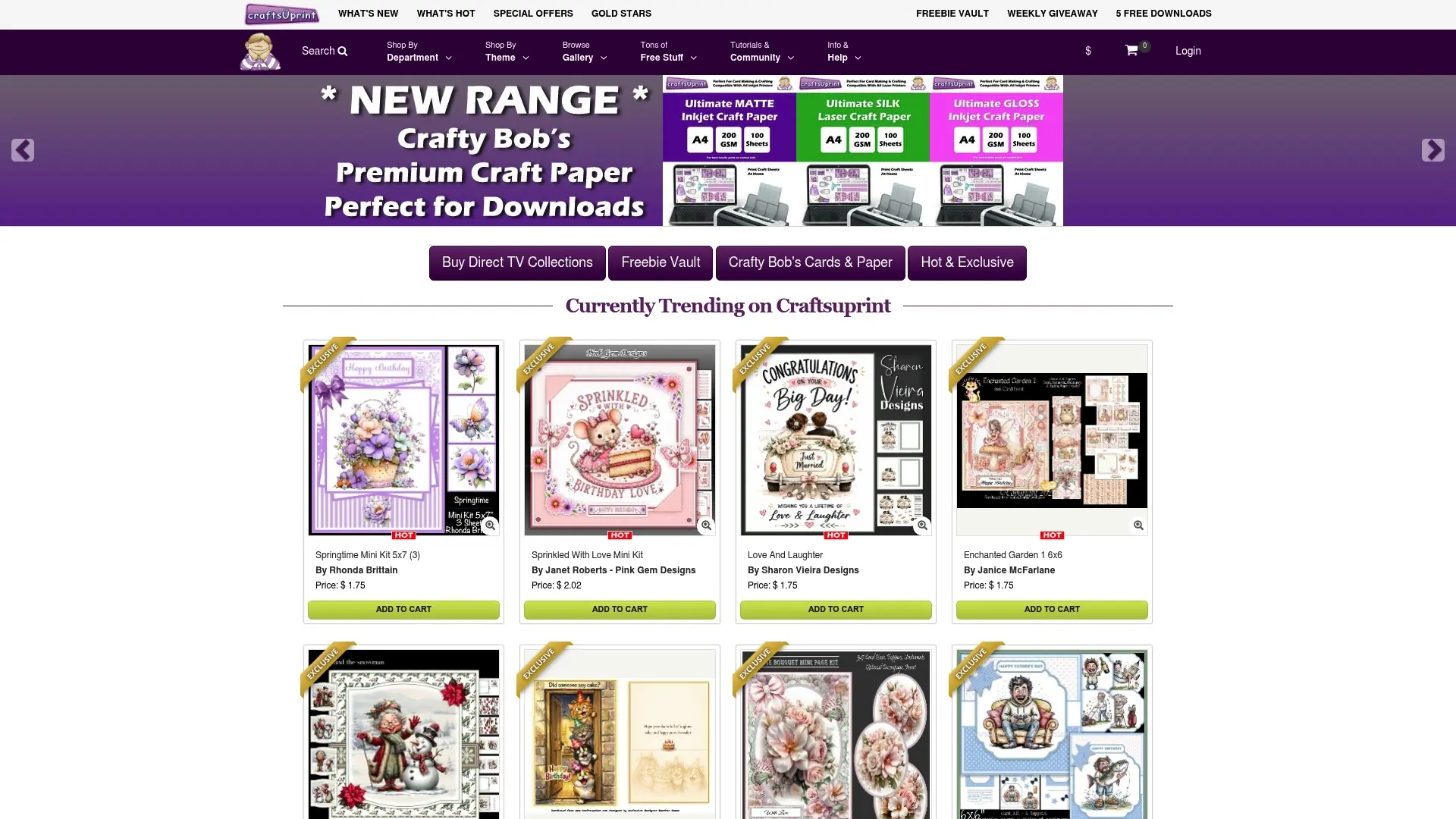
Craftsuprint gives independent designers and craft business owners the tools to turn promotional ideas into real revenue. Whether you are building a seasonal card-making collection, creating downloadable kits to use as sign-up incentives, or looking for ready-made designs to complement your own range, the platform supports every stage of your promotional strategy. New members can access a free Create and Craft gift as an immediate example of how value-add promotions work in practice. Browse the full range of craft supplies and downloads to find products that complement your next campaign, or explore the card-making pop-up collection for seasonal designs that pair perfectly with limited-time offers.
FAQ
What is the role of promotional offers in craft sales?
Promotional offers in craft sales attract new customers, encourage repeat purchases, and generate revenue spikes during seasonal peaks. Their primary function is to provide a targeted incentive that motivates action without permanently reducing the perceived value of your work.
How often should craft sellers run discount promotions?
Strategic discounting tied to specific events or seasonal launches outperforms constant discounting in both margin protection and customer quality. Reserve percentage discounts for clearance, seasonal launches, or loyalty rewards rather than using them as a default sales tactic.
Do loyalty programmes work for small craft businesses?
Loyalty programmes boost repeat business by roughly 40% for craft retailers, making them one of the highest-return promotional formats available even for very small operations. A simple digital stamp card or tiered reward system is sufficient to see measurable results.
What is the best timing for seasonal craft promotions?
Launching campaigns three to four weeks before a seasonal peak builds momentum and positions your brand before competitors increase their activity. Seasonal peaks account for 60 to 70% of annual craft revenue, so early preparation directly determines the majority of your yearly income.
How can craft sellers promote without devaluing their brand?
Frame offers as community access, early releases, or value-add gifts rather than price reductions wherever possible. Email sign-ups framed as community invitations preserve brand equity and attract customers motivated by your creative work rather than by the lowest price.