
Why build a craft brand online: your 2026 guide

TL;DR:
- Building a craft brand online creates a recognizable identity that connects products with buyers and commands higher prices. Strong branding boosts prices by emphasizing storytelling, consistency, and emotional connection, making price less important. Developing a clear visual identity, authentic storytelling, and focusing on one primary platform are vital for long-term success.
Building a craft brand online means creating a recognisable identity that connects your handmade products with customers, commands premium prices, and generates repeat sales. For aspiring craft entrepreneurs, the question of why build a craft brand online has a clear answer: without a brand, you are selling a product. With one, you are selling an experience. Strong branding allows handmade businesses to command a 30% to 100% price premium over competitors selling equivalent items. That gap is not luck. It is the direct result of consistent identity, compelling storytelling, and deliberate digital presence. Craftsuprint supports independent designers in building exactly that kind of presence, giving makers the tools and marketplace to turn creative work into a sustainable income.
Why build a craft brand online to increase your prices?
A strong brand is the single most effective way to escape price competition. When buyers cannot distinguish your work from a generic alternative, they default to choosing the cheapest option. When they recognise your name, your aesthetic, and your story, price becomes secondary.
The evidence is direct. Strong branding raises pricing by 30% to 100% compared to identical non-branded items. That means a greetings card kit priced at £4 without branding could realistically sell for £6 to £8 with a coherent brand behind it. The difference is not the card. It is the perceived value attached to the maker’s identity.
“Moving from generic product descriptors to emotive, specific positioning helps avoid price wars and secures higher margins.”
Emotional and experiential factors drive this premium. Buyers of handmade goods are not purely rational. They want to feel connected to the person who made the item. A brand story that explains why you started, what materials you choose, and what values guide your work gives buyers a reason to pay more. That reason is emotional, not logical, and it is far more durable than a discount.
Consistency reinforces the premium over time. A maker who uses the same colour palette, the same tone of voice, and the same visual style across every touchpoint trains buyers to recognise and trust them. That recognition compounds. Each new product launch benefits from the credibility built by every previous one. Unique, emotive positioning shifts buyer focus away from price entirely, which is the goal every craft entrepreneur should be working towards.

Pro Tip: Write a single sentence that describes who you make for and why. Pin it above your workspace. Every product, post, and packaging decision should pass that test before it goes live.
What are the key components of a strong digital craft identity?
A digital craft identity is the sum of every visual and verbal choice you make online. It is not a logo. It is a system of consistent signals that tell buyers, at a glance, who you are and what you stand for.
Choosing your name and nailing availability
Your brand name must be available as a domain, a social handle, and ideally a marketplace username. Check all three before committing. A name that works on one platform but is taken on another creates confusion and dilutes recognition. Short, memorable, and specific names outperform generic ones. “Meadow Paper Studio” communicates more than “CraftsbyJane” and is easier to search for.
Building a visual identity that travels
A practical brand kit with 3 to 6 colours, 1 to 2 fonts, and consistent photo staging gives even makers with limited design skills a coherent visual identity. This matters because buyers encounter your brand across multiple platforms before they purchase. If your Instagram grid looks different from your marketplace listings, trust erodes. Consistency is the work.
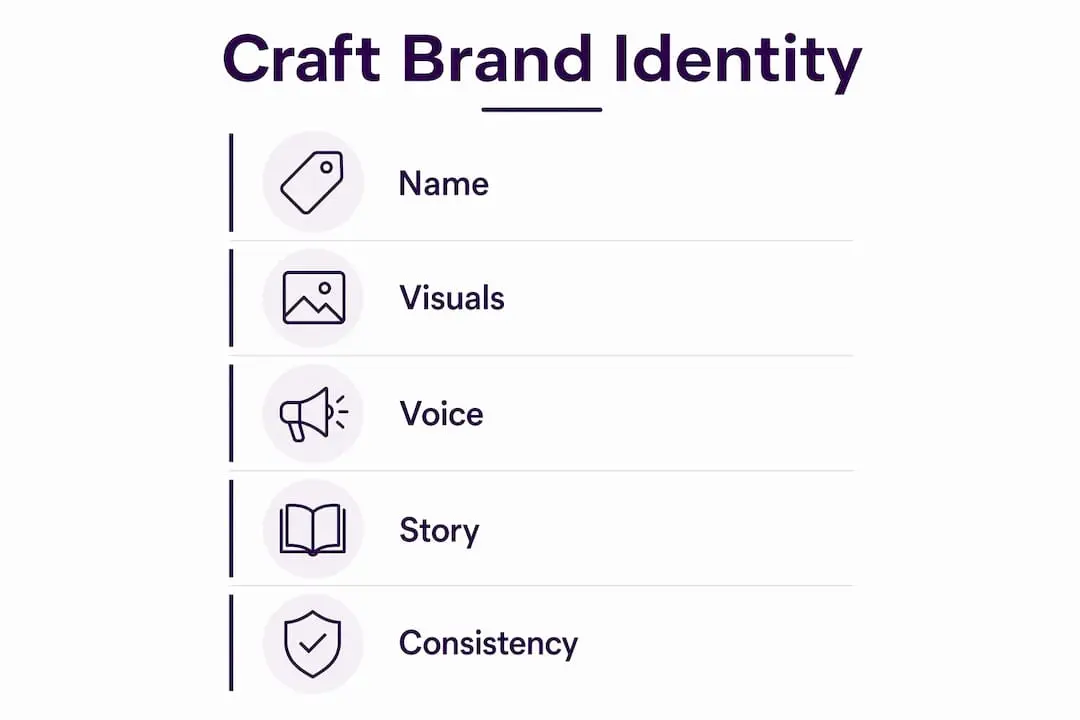
Photo style is particularly powerful for craft brands. Natural light, a consistent background colour, and a recognisable prop or surface create an instantly identifiable aesthetic. You do not need a professional photographer. You need a repeatable setup.
Crafting your brand voice and story
Your brand voice is how you sound in product descriptions, social captions, and customer messages. Decide early whether you are warm and conversational, precise and informative, or playful and irreverent. Then stay there. Inconsistency in tone is as damaging as inconsistency in visuals.
Your origin story is your most underused asset. Why did you start making? What problem were you solving for yourself? What do you believe about handmade goods that mass production cannot replicate? Answers to these questions form the foundation of a brand story that buyers remember and repeat to others.
Niche positioning and signature products
The importance of digital craft identity grows sharply when you operate in a crowded category. Niche positioning solves this. Instead of selling “paper crafts,” you sell “botanical card kits for slow Sunday afternoons.” The specificity attracts the right buyer and repels the wrong one, which saves time and increases conversion.
Signature products anchor your brand in buyers’ minds. Choose two or three products that best represent your aesthetic and make them the centrepiece of every launch, every social post, and every promotional offer.
Pro Tip: A simple, readable wordmark using free font tools is sufficient for your first 6 to 12 months. Early brand equity builds through photography, storytelling, and content frequency, not expensive logo design.
Which platforms and strategies best support craft brand growth?
Platform choice is a branding decision, not just a sales decision. Where you sell shapes how buyers perceive you. A maker selling exclusively through a large general marketplace signals something different from one with an owned website and a curated newsletter list.
The most effective approach is to prioritise one primary sales platform and one support channel. Spreading across five platforms simultaneously fragments your energy and produces weak presence everywhere rather than strong presence somewhere. Makers should focus on meaningful engagement signals such as saves and shares rather than follower counts. A post saved 200 times by 500 followers outperforms one liked 2,000 times by 50,000 followers in terms of buying intent.
The platform progression for most craft businesses follows a clear pattern:
- Start on a marketplace. High-traffic marketplaces provide immediate visibility without requiring you to build an audience from scratch. Use this phase to validate demand, gather reviews, and refine your product range.
- Build a support channel. Choose one social platform where your ideal buyer spends time. Post consistently, share process content, and direct followers to your listings. The role of social sharing for craft brands in 2026 is primarily about trust, not reach.
- Transition to an owned website at scale. Marketplace fees outweigh website costs at higher volumes, making the transition to an owned site financially sensible beyond roughly 100 orders per month. An owned website also gives you full control over brand presentation, customer data, and pricing.
- Invest in branded packaging. Branded unboxing experiences increase customer loyalty and brand sentiment by approximately 40%, particularly when aligned with values like sustainability. A tissue-wrapped order with a handwritten note costs pennies and creates a memory.
- Set realistic timeline expectations. Successful craft businesses stabilise over 18 to 24 months, with the initial launch roadmap best executed within a focused 90-day period. Treat the first three months as a testing phase, not a revenue phase.
Craftsuprint’s marketplace gives independent designers a ready-made platform to list and sell digital craft downloads without building an audience from zero. For makers whose products translate to printable formats, this removes the hardest part of the launch phase entirely.
How does authentic storytelling build long-term customer loyalty?
Authentic storytelling is the mechanism through which buyers move from one-time purchasers to loyal advocates. It is not a marketing tactic. It is the honest communication of who you are and how you work.
Sharing authentic constraints and real craft stories in digital format deepens emotional bonds and trust more effectively than polished marketing content. A photo of your crowded craft table tells a more compelling story than a studio-perfect flat lay. A caption explaining why you ran out of a particular paper and what you sourced instead makes buyers feel included in your process. That inclusion creates loyalty.
The most effective storytelling elements for craft brands include:
- Origin stories. Explain why you started and what you were trying to solve. Buyers who understand your motivation feel invested in your success.
- Process transparency. Show the stages between raw material and finished product. This communicates skill and justifies price without you having to say either explicitly.
- Honest constraints. Share the realities of working from a spare bedroom or a kitchen table. These details are relatable, not embarrassing. They humanise your brand in ways that corporate aesthetics cannot replicate.
- Customer stories. Share how buyers use your products. A photo of a customer’s finished card made from your kit is more persuasive than any product description you could write.
- Consistent persona. Brand identity in craft is about consistency and authenticity rather than corporate aesthetics. Stay recognisably yourself across every post, every product, and every customer interaction.
Pro Tip: Digitally translating the physical craft experience, including sharing workspace limitations and process stories, strengthens authentic engagement more than any polished campaign. Show the real thing.
The packaging experience extends storytelling into the physical world. A branded sticker, a tissue paper colour that matches your palette, or a printed insert with care instructions all reinforce your identity at the moment of highest emotional engagement: when the buyer opens their order. Personalised notes and custom packaging are among the highest-return investments a craft brand can make at any stage.
Key takeaways
Building a craft brand online is the difference between selling products and building a business that buyers return to, recommend, and pay a premium for.
| Point | Details |
|---|---|
| Brand commands premium pricing | Strong branding raises prices by 30% to 100% over unbranded equivalents of the same quality. |
| Consistency builds recognition | A brand kit of 3 to 6 colours, 1 to 2 fonts, and a consistent photo style creates identity without design expertise. |
| Platform focus beats platform spread | One primary sales channel and one support channel outperforms thin presence across five platforms. |
| Storytelling drives loyalty | Authentic process content and origin stories build emotional bonds that sustain repeat purchases. |
| Patience is part of the plan | Most craft businesses stabilise over 18 to 24 months; the first 90 days are for testing, not profit targets. |
What I have learned about building a craft brand online
Most aspiring craft entrepreneurs I have observed make the same mistake: they treat branding as something to sort out later, once the products are ready and the sales are coming in. The logic seems reasonable. Get the product right first, then worry about the packaging and the story. In practice, it works the other way around.
Buyers do not discover your product and then decide whether to trust you. They encounter your brand first, form an impression in seconds, and then decide whether to look at your product at all. If that first impression is inconsistent or generic, the product never gets a fair hearing.
The other misconception I see constantly is that branding requires significant investment. Many new craft entrepreneurs spend £250 to £400 on professional logo design before they have made a single sale. That money is almost always wasted. A wordmark in a clean free font, a consistent photo background, and a clear one-sentence brand statement will outperform an expensive logo every time in the early months. The logo matters eventually. The story matters from day one.
What actually builds a craft brand is repetition. The same colours. The same voice. The same values, communicated in every post, every product description, and every order that goes out the door. Brands do not arrive fully formed. They accumulate. Each consistent touchpoint adds a small deposit to a trust account that buyers draw on when they decide whether to purchase.
The craft entrepreneurs I have seen succeed are not the ones with the most polished aesthetics. They are the ones who showed up consistently, shared their process honestly, and treated every customer interaction as a branding moment. That is not a strategy. It is a habit. Build the habit first, and the strategy follows.
— Rob
Craftsuprint: your starting point for craft brand growth
Building a brand takes time, but having the right creative resources from the start makes the process considerably faster.
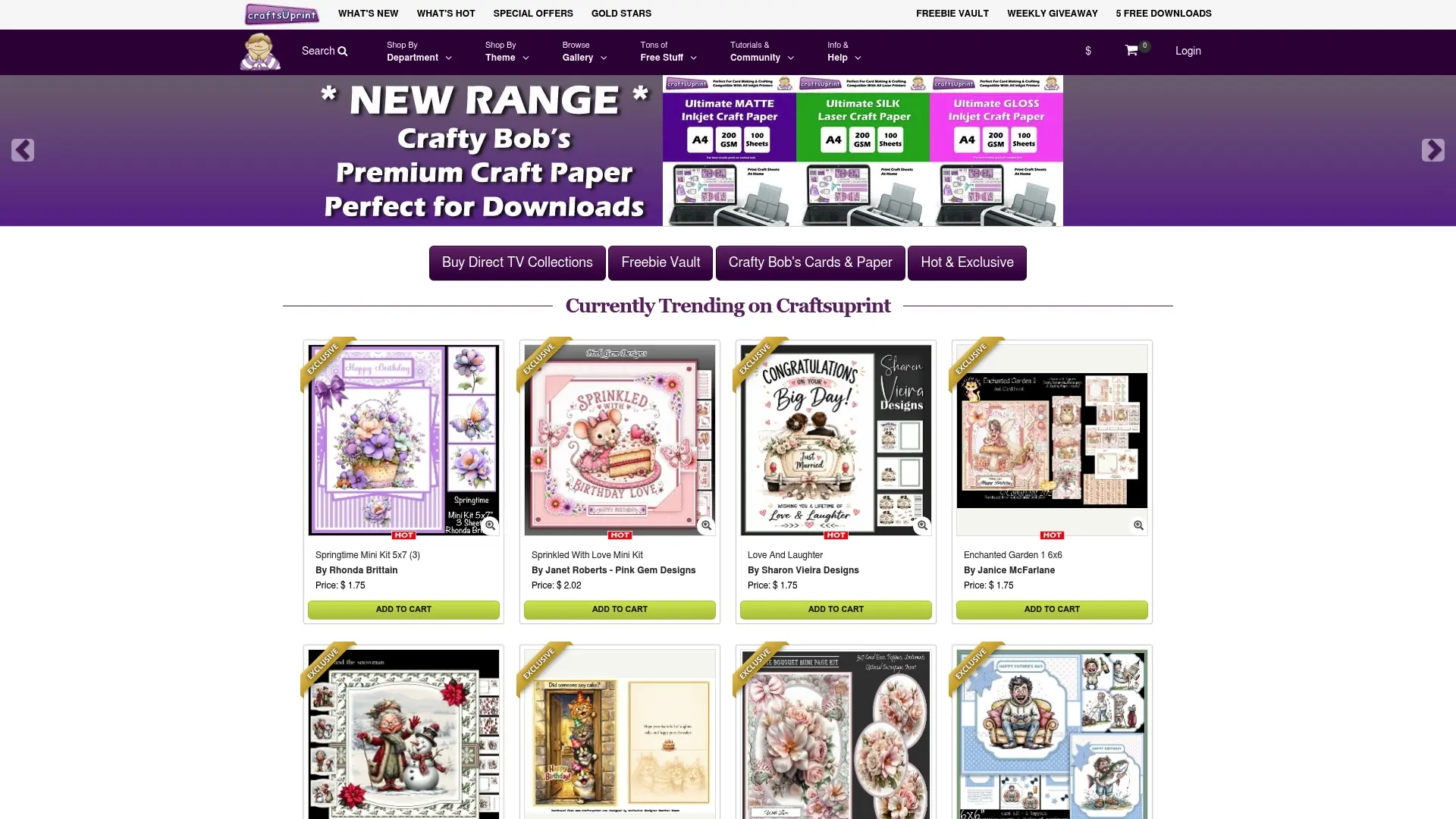
Craftsuprint is a dedicated marketplace for digital craft enthusiasts, giving independent designers a platform to sell printable projects, card making kits, and paper craft designs to an engaged community of buyers. Whether you are looking to test a new product range or expand an existing one, Craftsuprint’s craft supplies catalogue and free members gift offer a practical starting point. The Gold Star programme also gives makers a route to earn income while building their brand within a community that already values handmade work. If you are ready to put your designs in front of buyers, Craftsuprint removes the barriers between your creativity and your first sale.
FAQ
What does building a craft brand online actually mean?
Building a craft brand online means creating a consistent identity, including a name, visual style, and brand story, that connects your handmade products with buyers across digital platforms. It goes beyond having a shop listing; it is the sum of every impression a buyer forms before and after purchase.
How much of a price premium can a strong craft brand command?
Strong branding allows handmade businesses to charge 30% to 100% more than unbranded equivalents of the same quality. The premium comes from perceived value, emotional connection, and buyer trust built through consistent identity and storytelling.
How long does it take to build a successful craft brand online?
Most craft businesses stabilise over 18 to 24 months. The recommended approach is to complete an initial launch roadmap within 90 days, focusing on demand validation and brand consistency before scaling.
Do I need a professional logo to start building my craft brand?
A simple wordmark using a free font is sufficient for the first 6 to 12 months. Early brand equity builds through photography, storytelling, and content consistency, not logo design. Invest in visuals and story before spending on professional branding services.
Which platforms work best for promoting a craft brand online?
Start with one high-traffic marketplace to validate demand, then add one social support channel focused on process content and authentic storytelling. Transition to an owned website once order volumes make marketplace fees less cost-effective, typically beyond roughly 100 orders per month.