
The role of social sharing for crafters in 2026

TL;DR:
- Social sharing helps crafters build community trust and significantly increase sales through platform engagement. Short-form videos and tutorials generate higher reach and foster authentic relationships that convert followers into buyers. Consistent, authentic content that emphasizes process and participation drives sustainable growth and success in the craft business.
Social sharing for crafters is the practice of publishing craft-related content on platforms like Instagram, TikTok, and Facebook to inspire, educate, build community, and generate sales. It is both a community tool and a business catalyst, and the two functions are inseparable. UGC-driven conversions are 6.73 times higher than pages without user content, according to Emplifi Q1 2026 benchmarks. That figure tells you something fundamental: the crafting community does not just browse social media for entertainment. It uses social proof, shared projects, and peer tutorials to decide what to buy, what to make, and who to trust. Whether you sell printable card kits, handmade jewellery, or paper crafts, understanding how social sharing works is the difference between a hobby and a growing creative business.
How does social sharing drive engagement and trust among crafters?
The role of social sharing for crafters goes well beyond posting a finished project and waiting for likes. It is a two-way exchange that builds the kind of trust no advertisement can manufacture.
User-generated content drives 4.11 times higher website visits compared to pages without it, and Emplifi recorded a 57% quarter-on-quarter increase in UGC-driven conversions in Q1 2026. This matters because it confirms that when your followers share their own makes using your designs or tutorials, they are doing your most persuasive marketing for you. Visual proof from real people removes the uncertainty that stops a browser from becoming a buyer.
Sprout Social’s 2026 community management research found that 51% of users expect brands and creators to engage actively across all platforms, not simply broadcast content. For crafters, this means replying to comments, asking questions in captions, and responding to direct messages with genuine interest. Treating your social feed as a conversation rather than a noticeboard is what separates creators with loyal communities from those with large but passive follower counts.
Sharing work-in-progress posts and troubleshooting moments is one of the most underused trust-building tactics available to crafters. When you post a half-finished card and say “I’m not sure about this colour combination, what do you think?”, you invite participation. According to research on community interaction as content, those interactions become future conversion assets: crowdsourced Q&As, buyer reassurance threads, and FAQs that help undecided customers commit.
Here is what the most effective crafters do consistently to build engagement and trust:
- Share finished projects alongside the process, not just the polished result
- Post work-in-progress images and invite opinions on colour, technique, or design choices
- Respond to every comment in the first hour after posting, when algorithmic momentum is highest
- Repost or reshare customer and follower makes with credit, turning buyers into advocates
- Ask specific questions in captions rather than generic calls to action like “let me know what you think”
Pro Tip: Ask your followers to share photos of their own completed projects using a dedicated hashtag. Collect those posts and reshare them weekly. This creates a visible community gallery that new visitors find immediately reassuring.
Which types of social content perform best for crafters?
Not all content formats deliver the same results, and understanding the difference is the foundation of any practical social media strategy for craft artists.
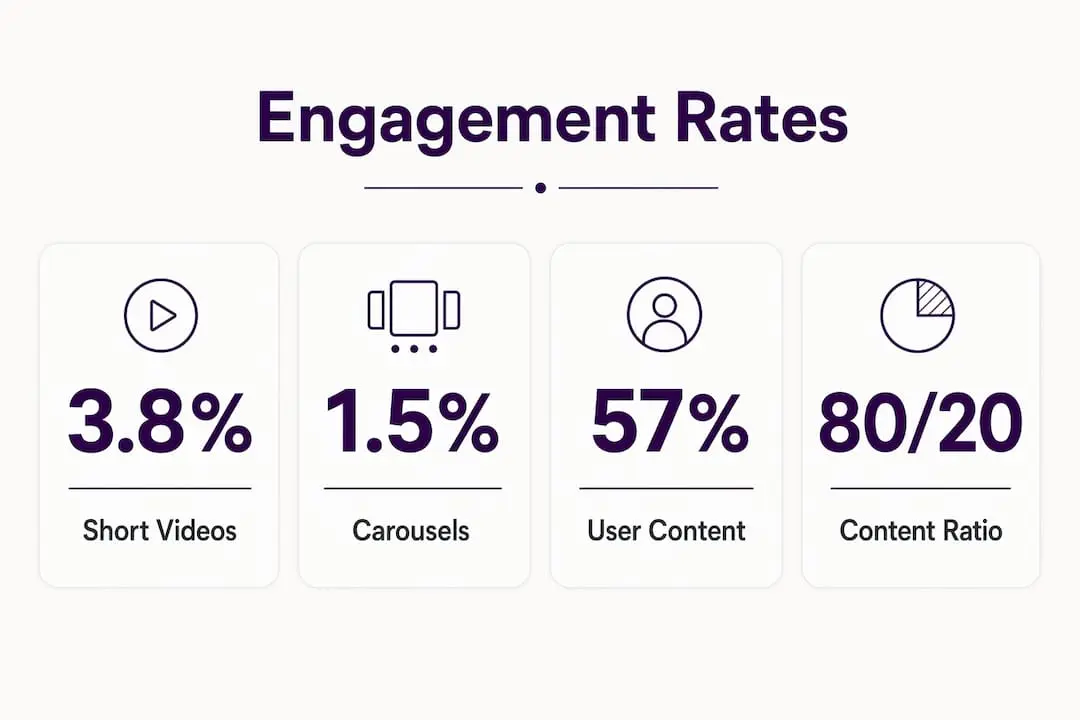
Short-form video is the clear leader. Reels and TikTok videos achieve an average engagement rate of 3.8%, compared to 1.92% for carousel posts and just 0.84% for static images, according to SearchLab’s 2026 social media benchmark report. That gap is not marginal. A short video showing you cutting, folding, and assembling a paper card kit will reach and engage roughly four times more people than a single photograph of the finished piece.
Carousels occupy a useful middle ground. They work well for step-by-step tutorials where each slide advances the instruction, and they generate saves, which signal strong interest to platform algorithms. A carousel titled “5 ways to layer vellum on handmade cards” gives followers a reason to save the post for later, which extends its reach over days rather than hours.
Process and tutorial content is how new crafters discover makers and designers before they ever consider purchasing. Most people find a crafter through inspiration or learning, not through a product listing. This means your content strategy must prioritise discovery first and conversion second.
| Content format | Average engagement rate | Best use case |
|---|---|---|
| Short-form video (Reels, TikTok) | 3.8% | Process reveals, speed makes, trend participation |
| Carousel posts | 1.92% | Step-by-step tutorials, product comparisons, tips |
| Static images | 0.84% | Finished project showcases, mood boards |
| Text or link posts | Below 0.5% | Community questions, event announcements |
Craft trends spread faster when users save, share, and engage with tutorial and process content, because those engagement signals tell platform algorithms to push the content further. A video of you making a mistake and correcting it will often outperform a flawless finished-product reveal, because it feels real and relatable.
Pro Tip: Follow an 80/20 content split. Dedicate 80% of your posts to discovery-oriented content such as tutorials, process videos, and community moments. Reserve 20% for direct promotion of products or downloads. This ratio builds the audience that makes your promotional posts worth posting.
How can crafters use social sharing to grow their business?
Growing a craft business through social sharing requires a deliberate approach, not just consistent posting. The importance of social media for crafters becomes most visible when you connect your content directly to real-world selling moments.
Susan Ganeshan, CMO at Emplifi, states that UGC is the fastest way to achieve ecommerce goals because authentic maker and customer content builds trust and increases willingness to pay. For independent craft sellers, this translates directly: a photo of a real customer holding a finished card made from your download is worth more than any product description you could write.
Craft fair vendors who build social media buzz before an event see measurably higher booth traffic. TheCraftMap’s 2026 research confirms that shoppers decide which booths to visit before they arrive, by checking event social pages and tagged posts. Facebook Events reach 35% more people than standard posts, making them a practical tool for any crafter with a stall to fill. The social sharing timeline for a craft fair should look like this:
- Two weeks before: Post a teaser showing new stock, a sneak peek of your display, or a behind-the-scenes packing video to build anticipation
- One week before: Share the event details, your booth number, and a reason to visit specifically your stall, such as an exclusive design or a limited run
- The day before: Use Instagram Stories or a Facebook Event update to remind followers and share your setup process
- During the event: Post live Stories or short TikTok clips showing the atmosphere, your display, and happy customers (with permission)
- After the event: Share a recap post with highlights, thank your customers publicly, and preview what is coming next
Platform-specific features matter more than most crafters realise. Instagram Stories disappear after 24 hours, which creates urgency. TikTok’s algorithm actively surfaces content from smaller accounts when it uses trending audio, giving independent crafters a genuine reach advantage that paid advertising cannot replicate at the same cost. Facebook Events and Groups remain the strongest tools for local craft communities and fair-goers.
Engaging with followers promptly after posting is not optional if growth is the goal. The first 60 minutes after a post goes live are when algorithmic distribution is decided. Replying to comments, liking responses, and asking follow-up questions during that window signals to the platform that your content is generating genuine interaction.
Pro Tip: Before your next craft fair, create a location-tagged Instagram post and a Facebook Event at least ten days in advance. Tag the event organiser and any fellow vendors. Cross-tagging multiplies your reach without any additional content creation.
What challenges do crafters face with social sharing?
The benefits of sharing crafts online are well documented, but the pitfalls are just as real and far less discussed. Most crafters who struggle with social media are making the same small set of mistakes.
The most common error is posting only finished product shots. A feed full of polished images with prices in the caption reads like a catalogue, not a community. Followers scroll past catalogues. They stop for stories, processes, and people. If every post is a sales prompt, you train your audience to ignore you.
A second mistake is ignoring the community side entirely. Posting without responding to comments is the social media equivalent of handing out leaflets and walking away. Active engagement across all platforms is what 51% of users expect, and failing to deliver it signals disinterest in the very people you are trying to attract.
Expecting immediate sales from social sharing is a third and particularly damaging misconception. Social platforms are discovery and trust environments first. Most people who find you through a tutorial or a process video will follow you for weeks before they buy anything. Measuring success by immediate sales misses the entire point of how the channel works.
Here are the most common challenges and how to address each one:
- Over-posting product shots: Replace at least half your product posts with process content, tutorials, or community reposts
- Ignoring comments: Set a daily reminder to spend 15 minutes responding to comments and messages
- Platform mismatch: Adapt content to each platform rather than cross-posting identical content everywhere. TikTok rewards raw and immediate; Pinterest rewards polished and searchable
- Inconsistent posting: A schedule of three posts per week maintained for six months outperforms ten posts in one week followed by silence
- Burnout from over-commitment: Batch-create content in one session per week rather than creating on demand every day
Pro Tip: Plan your content in three categories: one authenticity post (behind the scenes, work in progress, personal story), one educational post (tutorial, tip, technique), and one promotional post per week. This rhythm keeps your feed varied and your audience engaged without requiring daily creative effort.
Key takeaways
Social sharing builds both community trust and business growth for crafters when content prioritises discovery, authenticity, and two-way engagement over direct promotion.
| Point | Details |
|---|---|
| UGC drives conversions | Pages with user-generated content convert 6.73x more than those without, making community sharing your most powerful sales tool. |
| Short-form video leads engagement | Reels and TikTok videos achieve 3.8% engagement, four times higher than static images, making video the priority format. |
| Discovery before conversion | Most crafters find new makers through tutorials and process content, not product listings. Build trust before promoting. |
| Craft fair social timing | Start building buzz at least two weeks before an event. Shoppers research booths before they arrive. |
| Consistency beats volume | A steady three-posts-per-week schedule sustained over months outperforms sporadic high-volume posting every time. |
What I have learned from watching crafters share their work
I have spent a long time watching how crafters use social platforms, and the pattern that surprises most people is this: the accounts that grow fastest are rarely the ones with the most polished content. They are the ones that make you feel included.
The crafters who share a half-finished card and say “I have no idea if this works yet” attract more genuine engagement than those who only post gallery-perfect results. There is something about visible uncertainty that invites participation. People want to help, to weigh in, to feel useful. That is not a weakness in your content. It is the mechanism by which communities actually form.
What I find most underappreciated is the patience this requires. Crafters who approach social sharing expecting a quick return on effort almost always give up before the compounding effect kicks in. The trust that converts a follower into a buyer is built over dozens of interactions, not one viral post. The crafters I have seen turn a hobby into a genuine income stream are the ones who treated their community like people worth knowing, not an audience to convert.
The other thing worth saying plainly: social sharing has genuinely lowered the barrier to becoming a professional maker. A crafter with a Craftsuprint account, a phone camera, and a consistent posting habit now has access to a global audience that would have required a physical shop and a marketing budget twenty years ago. That is not a small thing. It is worth taking seriously.
— Rob
Explore craft resources that fuel your social sharing
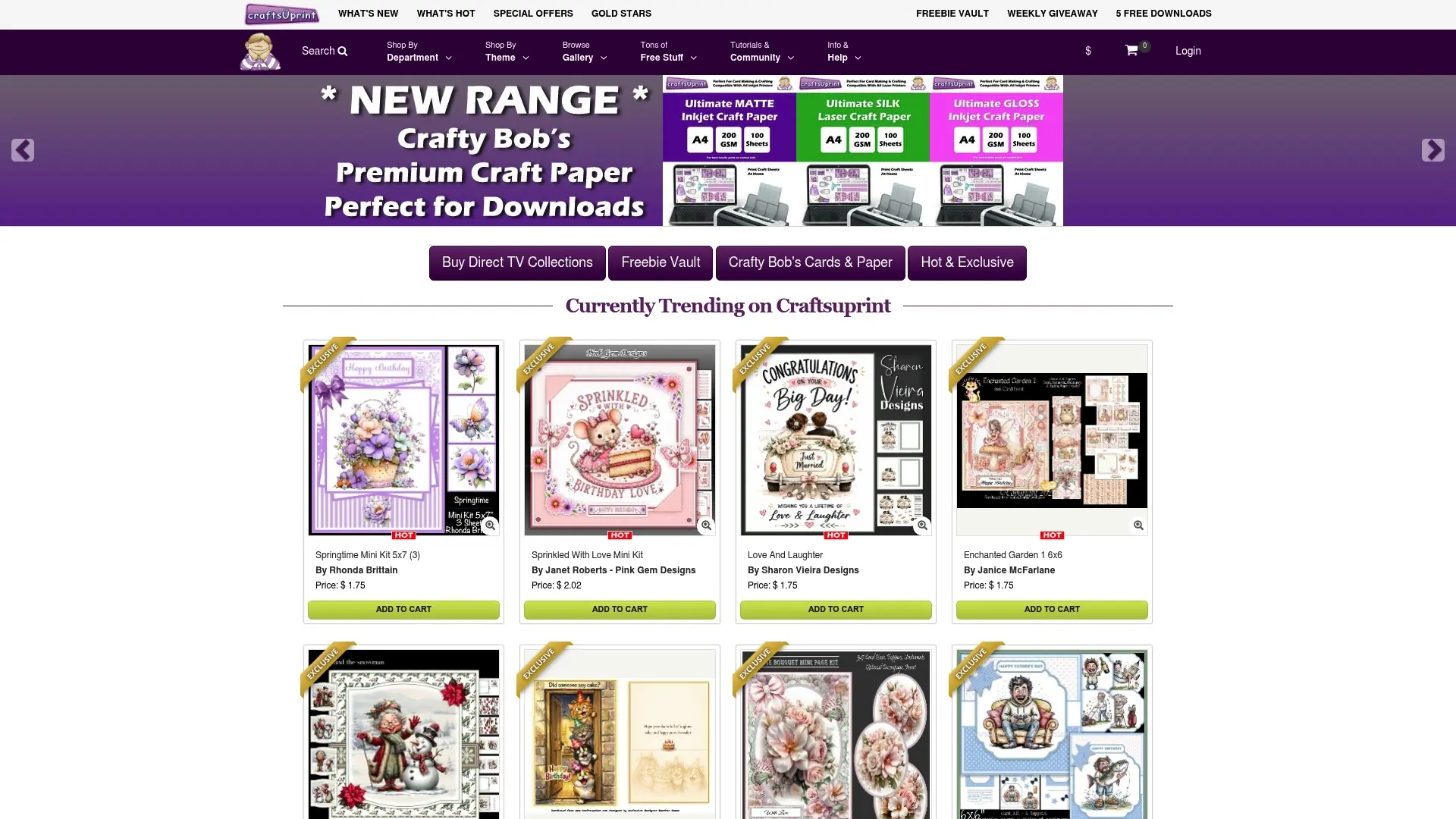
Creating content worth sharing starts with having projects worth making. Craftsuprint offers an extensive range of card making downloads, craft supplies, project ideas, and tutorials designed specifically for hobby crafters and independent designers. Whether you are looking for a printable mini kit to feature in your next process video or a themed design set to showcase at a craft fair, the platform gives you ready-to-use creative material that photographs and films beautifully. Independent designers on Craftsuprint also benefit from the community aspect, with weekly freebies and the Gold Star programme supporting creators who want to grow both their craft and their income through sharing.
FAQ
What is the role of social sharing for crafters?
Social sharing for crafters is the practice of publishing craft content on platforms like Instagram, TikTok, and Facebook to build community, inspire others, and drive sales. It functions as both a trust-building tool and a business growth channel when used consistently.
Which social media platform works best for craft artists?
Short-form video platforms like TikTok and Instagram Reels deliver the highest engagement rates at 3.8%, making them the strongest choice for reach and discovery. Pinterest remains highly effective for searchable, tutorial-style content with longer shelf life.
How does user-generated content help crafters?
Pages featuring user-generated content convert 6.73 times more visitors than those without it, according to Emplifi Q1 2026 data. For crafters, this means resharing customer makes and follower projects is one of the most direct ways to increase sales.
How often should crafters post on social media?
Three posts per week maintained consistently over several months is more effective than irregular bursts of high-volume posting. Consistency signals reliability to both platform algorithms and your audience.
How can crafters use social sharing to promote craft fairs?
Start posting at least two weeks before the event with teaser content, stock previews, and setup videos. TheCraftMap’s 2026 research shows that craft fair shoppers decide which booths to visit before they arrive, based on social media research.