
UK Crafters: 14 Day Legal Rights for Digital Download Refunds

If you buy a digital craft download in the UK, you almost certainly lose your 14-day cancellation right the moment you tick a box confirming you want the download to start immediately. That waiver only holds if the seller clearly asked for your consent and told you what you were giving up. If the file turns out to be faulty, though, the Consumer Rights Act 2015 still entitles you to a repair, a replacement, or a refund, regardless of what you clicked at checkout.
TL;DR:
- Confirm that you give explicit consent for download to start immediately and that the seller clearly states this will end your cancellation rights.
- Faulty files such as corruption, incomplete content, or misrepresentation qualify for repair, replacement, or refund under law, but dislike of the design does not.
- Evidence like screenshots and saved emails are crucial to support your claim and should be collected before contacting the seller.
- Sellers must issue refunds within 14 days through the original payment method without deducting fees or offering store credit instead of cash.
- Read the refund and license policies carefully to ensure that the terms do not inadvertently waive your legal rights.
Table of Contents
- Digital download refund policy UK: when the cooling-off period applies
- What counts as faulty digital content under the Consumer Rights Act 2015
- How to claim a refund on a digital download, step by step
- What sellers must get right before and after a sale
- How Craftsuprint approaches transparency on downloads
- Where to check the law yourself
- Get your next craft download with confidence
- The gap between the law on paper and what buyers actually experience
- Sources
- FAQ
Digital download refund policy UK: when the cooling-off period applies
The Consumer Contracts Regulations 2013 give UK shoppers 14 days to cancel most things bought online without giving a reason. Digital content is the exception that catches people out. Because a card pattern or a printable kit can be downloaded and copied in seconds, the law lets sellers ask you to give that right up in exchange for instant access.
That waiver only works if two things happen at the same time. First, you must give express consent to start the download right away, not just click “buy”. Second, the seller has to tell you explicitly that starting the download means losing your right to cancel. Miss either step and your cancellation right can survive the download, even though the file is sitting on your computer.
- Before download: you can normally still cancel within 14 days, no reason needed.
- After download, with clear consent given: the right usually ends the moment the file starts transferring.
- After download, with vague or missing consent wording: the 14-day right can still apply, according to Trading Standards guidance for business.
Pro Tip: Screenshot the checkout page and save the confirmation email before you download anything. If a dispute arises later, that tick-box wording is the evidence that decides whether your cooling-off right ever existed.
What counts as faulty digital content under the Consumer Rights Act 2015
A “fault” in a digital download means something objectively wrong with the file, not simply that you changed your mind about the design. Corrupted files that won’t open, missing pages in a multi-sheet pattern, broken download links, or a seller misrepresenting what a licence actually covers all count as faults under section 45 of the Consumer Rights Act 2015.
When a fault is genuine, the law sets out a fixed order of remedies. The trader gets the first chance to fix it, usually by sending a working copy or replacing the file. Only if that repair or replacement is impossible, or fails, can you move on to a price reduction or a full refund. Craft buyers frequently assume they can reject a download simply because they don’t like the finished card. They can’t. As the House of Commons Library briefing on faulty goods makes clear, statutory quality rights cover defects, not taste.
- Corrupt or unopenable files: repair or replacement first.
- Persistently broken or incomplete content: escalate to a price reduction or refund.
- Simple dislike of the design: no statutory right applies.
Statistic Callout: Once a refund is agreed, the seller has a maximum of 14 days to pay it back, using the same payment method you used to buy.
How to claim a refund on a digital download, step by step
Getting a refund sorted usually comes down to having the right evidence ready before you contact anyone.
- Check your consent status. Look back at the checkout screen and confirmation email to see whether you validly waived your cooling-off right, or whether the wording was too vague to count.
- Gather proof of the fault. Screenshots of error messages, corrupted file previews, or a pattern missing pages all strengthen your case.
- Contact the seller directly. State clearly whether you want a repair, a replacement, or a refund, and give a reasonable deadline, a week is typical for a small digital file.
- Wait for the response. If a refund is agreed, it must land back with you within 14 days, on the same card or payment method.
- Escalate if refused. Options include Trading Standards, Citizens Advice, an alternative dispute resolution body, or a chargeback and, for larger purchases, a Section 75 claim if you paid by credit card.
Pro Tip: Keep every message in writing rather than by phone. If Trading Standards or a chargeback team gets involved later, a clear paper trail carries far more weight than “I called and they said yes.”
What sellers must get right before and after a sale
Sellers carry the legal weight here, not just buyers. Once a refund is agreed, it has to be paid without undue delay and no later than 14 days, and it must go back through the same payment method you originally used. Traders cannot deduct a processing fee or push you towards store credit instead of cash back.
Before any download begins, a seller must warn you clearly that starting it will end your cancellation right and get your explicit agreement to that. Vague small print buried in terms and conditions doesn’t meet that bar.
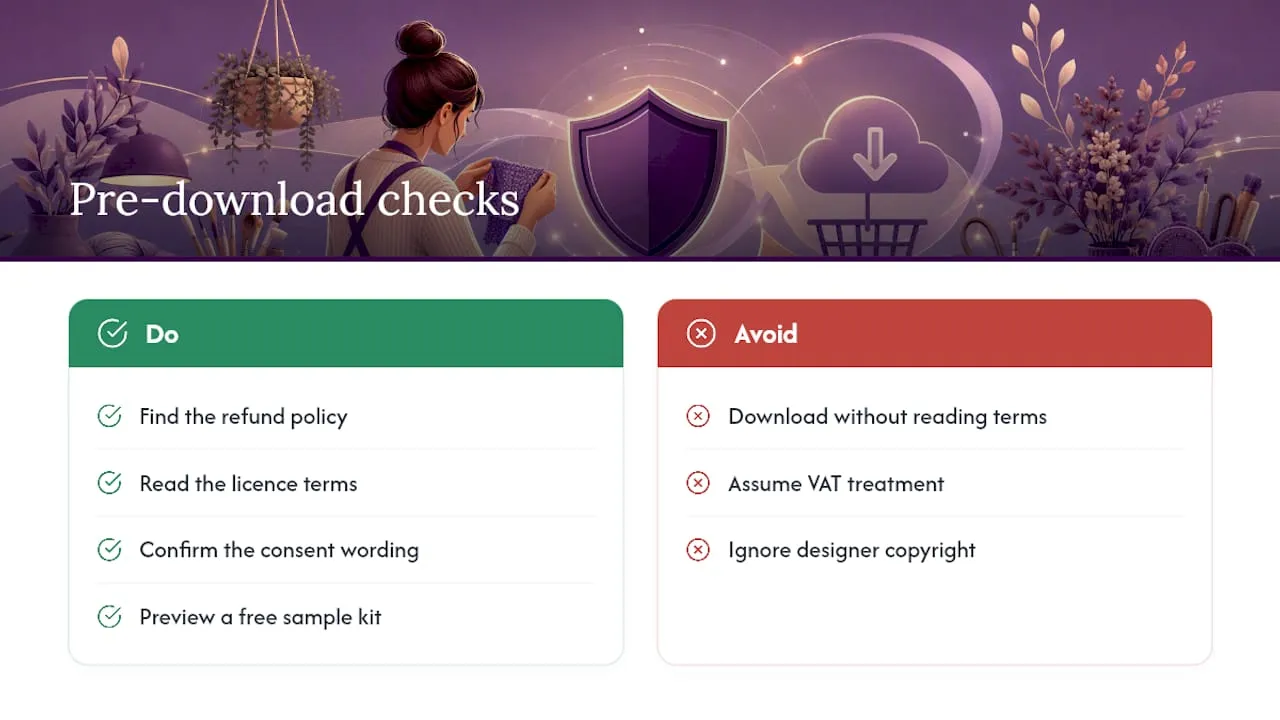
- Look for a visible refund policy link on the product page, not just in a footer.
- Check the licence terms state exactly what you can and can’t do with the file.
- Confirm the tick-box wording mentions both starting the download AND losing the cancellation right.
- See whether a free sample or demo exists so you can judge the design before paying.
How Craftsuprint approaches transparency on downloads
Marketplaces that spell things out clearly tend to generate fewer disputes, simply because buyers know what they’re getting before they pay. Craftsuprint publishes its VAT position on digital downloads and a dedicated copyright and DMCA policy covering designer rights and buyer protections, alongside free sample kits such as the Male Mini Kit that let you preview a designer’s style before committing.
On any marketplace, not just this one, the checks worth running are the same: find the refund policy, read the licence terms properly, and confirm the consent wording before you click download. A quick look at how digital downloads work in crafting is a useful primer if you’re new to buying printable patterns.
Where to check the law yourself
For the primary rules, Gov and the Consumer Rights Act 2015 itself are the two documents worth bookmarking.
- Trading Standards’ guidance for business on digital content shows real waiver examples.
- Citizens Advice and Resolver both offer free, practical help if a seller stops responding.
- The House of Commons Library briefing is a solid plain-English summary of the underlying law.
Get your next craft download with confidence
Reading a refund policy shouldn’t feel like homework, and it doesn’t need to put you off buying at all. Once you know what a valid consent tick box looks like and what “faulty” actually means in law, most of the anxiety around digital purchases disappears. Craftsuprint’s Create & Craft download range gives you plenty to browse, and new members can also claim a free Create and Craft gift as a low-risk way to try the platform out before committing to bigger kits.
The gap between the law on paper and what buyers actually experience
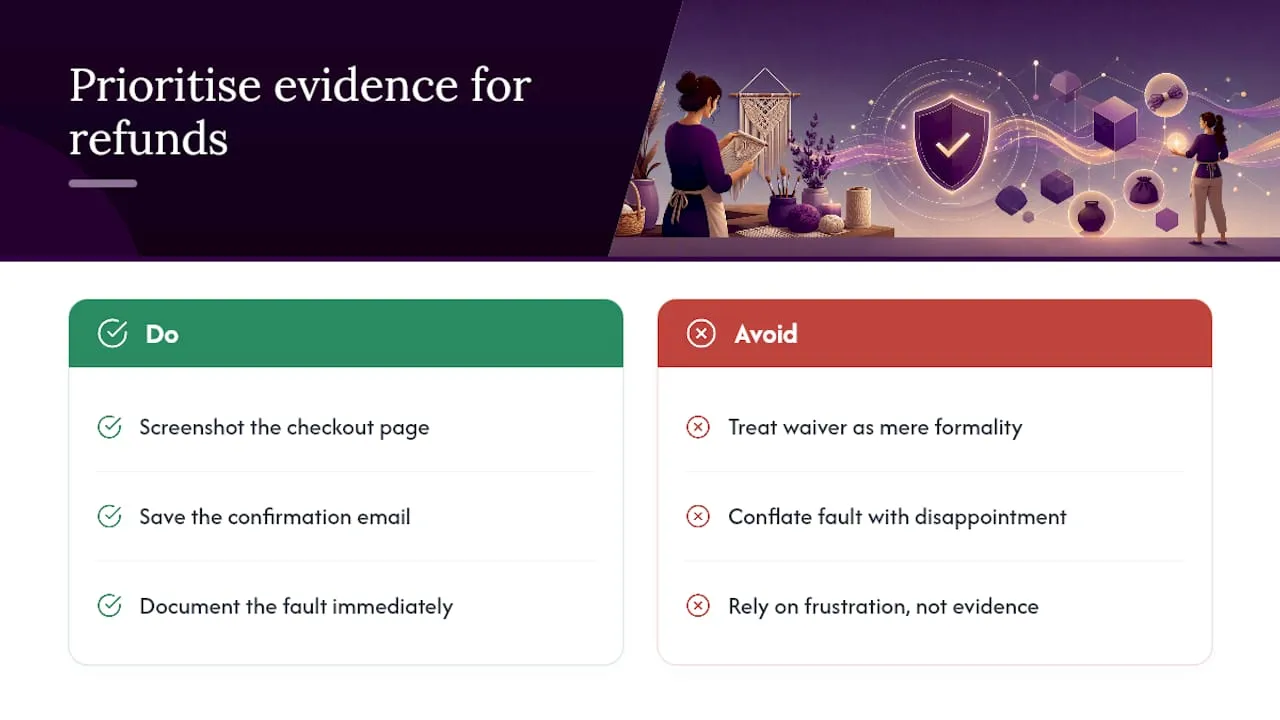
Most guidance on this topic treats the cooling-off waiver as a formality, a box you tick without thinking. That undersells how much power sits in that wording. The law doesn’t just ask whether you clicked something. It asks whether the seller told you, in plain terms, that you were giving up a right. A huge number of digital sellers, across every category, get this wrong through sloppy checkout design rather than bad intent, which leaves buyers with more protection than they realise.
Where conventional advice falls short is in treating faults and disappointment as the same problem. They aren’t. A corrupt file is a legal matter with a fixed remedy ladder. A design you simply don’t like isn’t, and no amount of complaining changes that. If you take one thing from this, prioritise evidence over emotion: screenshot the checkout, save the confirmation email, document the fault the moment you spot it. That paperwork, not your frustration, is what actually moves a refund request from “maybe” to “paid within 14 days.”
— Rob
Sources
- Gov
- Consumer Rights Act 2015, section 45 — Right to a refund for digital content
- Consumer Rights Act: Digital content – Guidance for business (Trading Standards)
- Which? – Can I cancel an online order?
FAQ
Can I get a refund on a digital download after downloading it?
Only if the file is faulty, or if you never validly waived your cooling-off right through clear consent, according to the Consumer Rights Act 2015.
How long does a seller have to refund a digital purchase?
Once a refund is agreed, sellers must pay it within 14 days, using the same payment method you originally used.
Does ticking a checkout box always waive my 14-day right?
No. It only waives the right if the box clearly states both that download starts immediately and that you lose your cancellation right by agreeing.
What can I do if a seller refuses a refund for a faulty download?
Escalate through Trading Standards, Citizens Advice, an alternative dispute resolution body, or a chargeback with your bank, and a Section 75 claim if you paid by credit card.
Is disliking a design the same as the download being faulty?
No. Statutory remedies cover objective defects like corrupt files or broken links, not personal taste, which the law treats as outside your refund rights.