
20 Craft Design Contest Ideas for Organizers With Ready Templates
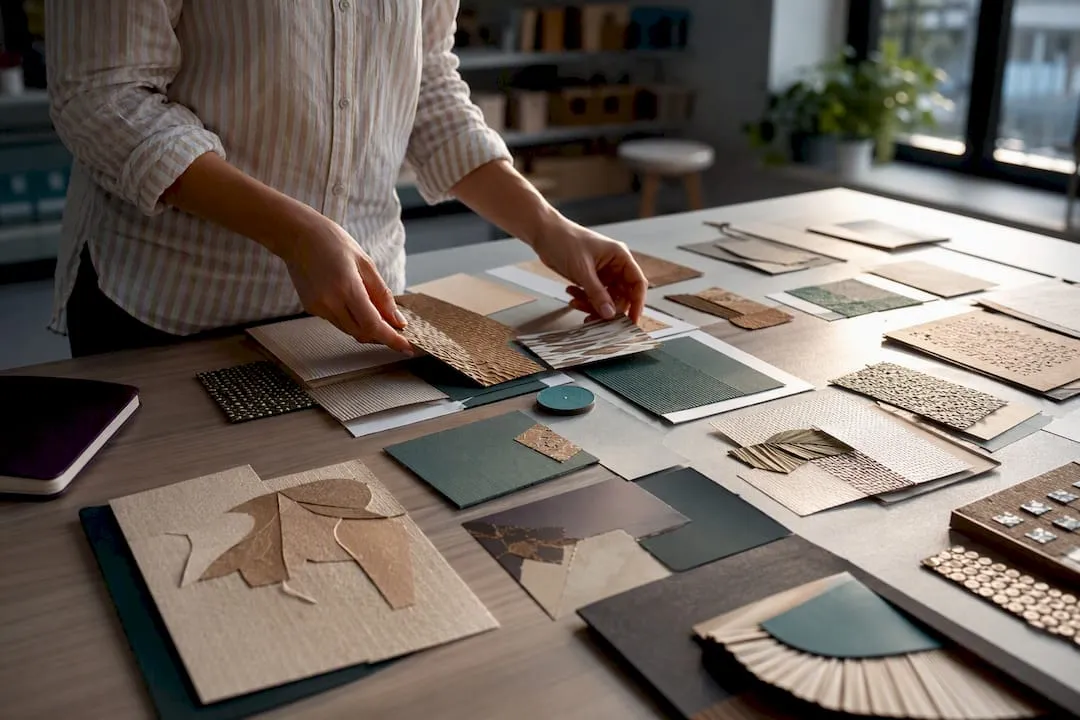
Here are craft design contest ideas that actually work, grouped by format, alongside the organiser templates you need to run one properly. This article gives you a numbered idea bank, a judging rubric, a submission checklist, and a rules framework, built for organisers, community groups, and entrants who want to pick a format, write a brief, and judge fairly without reinventing the process from scratch.
TL;DR:
- Most craft contests should tailor their format and timeline to the specific type, such as single-piece, sprint, or serialized, to ensure engagement and fairness.
- Clear rules on originality, eligibility, and rights are essential to prevent disputes and protect organizer interests, especially for pattern and design contests.
- Participants should submit detailed process photos and notes, including scale references and techniques, to satisfy judges and increase their chances of winning.
- Providing ready-made templates and promotional assets from platforms like Craftsuprint simplifies contest setup and enhances creative consistency.
- Effective promotion involves multi-channel announcements, engaging social media prompts, and early involvement from established participants to reach a broader audience.
Table of Contents
- Craft design contest ideas grouped by format
- Running a fair contest: timeline, rules and a judging rubric
- How to present a winning contest entry
- Prizes and incentives that pull in entries
- Craftsuprint tools that support a contest
- Making your contest genuinely inclusive
- Getting the word out: promotion that actually fills entries
- Rules, rights and copyright: what every contest agreement needs
- Getting viewers involved even when they are not entering
- Author perspective: quick lessons from running craft challenges
- Where to find downloads, kits and templates for your contest
- Selected contest rules and example programmes to read next
- Sources
- FAQ
Craft design contest ideas grouped by format
Picking a format matters more than picking a theme. A serialized competition and a 48-hour sprint demand completely different rules, prizes, and promotion, so decide the shape first, then fill it with a prompt.
Single-piece themed contests work as one-off entries judged against a fixed brief. These suit newsletters, forums, or a single social media push.
- Seasonal card showdown — one holiday or season, open technique. Entry needs a finished card photo and a one-line inspiration note. Beginner-friendly; judge on colour use and craftsmanship.
- Colour-constraint challenge — entrants get three fixed colours (say, teal, coral, gold) and must build a design around them. Intermediate; judge on colour harmony.
- One-stamp, one-die challenge — everyone uses the same single stamp or die but nothing else is fixed. Great leveller for skill gaps; judge on interpretation.
- Upcycled materials brief — entrants must reuse packaging, scrap paper, or offcuts. Some professional briefs go further and set a strict production budget entrants must work within and explain, a model worth borrowing if you want entrants to think like working designers rather than hobbyists.
- Miniature scale contest — everything must fit inside a matchbox or a 5cm square. Judge on detail under constraint.
Timed sprints (24 to 72 hours) reward speed and spontaneity, and they generate the sharpest social media content because entrants post work-in-progress shots in real time.
- Surprise theme sprint — the theme drops at a fixed time and entrants have 24 to 72 hours to finish. Time-limited challenges using this exact surprise-then-short-window structure tend to drive the highest real-time engagement, because followers watch the build happen live rather than seeing only a finished piece.
- Weekend materials dash — a fixed materials list (one sheet of card, one ribbon, one embellishment pack) with a 48-hour window.
- Speed pattern challenge — for knitters and crocheters, a small motif or swatch completed within 72 hours using a supplied yarn weight.
Serialized series (4 to 12 weeks) build a following episode by episode, which suits a community that wants ongoing engagement rather than a single event.
- Weekly prompt series — a new mini-theme each week over 8 to 12 weeks, judged episode by episode. This works best structured as prompt, judged round, then audience vote each week, since the momentum comes from the pattern repeating.
- Design-of-the-month ladder — entrants accumulate points across monthly rounds, with a grand final combining the top scorers.
- Skill-building series — each week adds one new technique (embossing, then die-cutting, then shading), so the series doubles as a tutorial.
Materials-limited and upcycle challenges appeal to sustainability-minded entrants and cost nothing to enter.
- Scrap-bin only — entrants may only use materials already in their stash.
- Single-sheet challenge — one sheet of card or paper, no additions beyond adhesive.
Pattern, paper, and fibre challenges suit designers who work in repeatable templates rather than one-off pieces.
- Pattern-book submission contest — entrants submit a full pattern (not just a finished piece) with written instructions, similar to the detailed submission process the Great Tennessee Yarn Tour pattern contest uses, complete with theme rules, yarn requirements, and swatch photo guidance.
- Digital-download design contest — entrants create a printable template (card front, gift tag set, paper pattern) intended for resale or free distribution.
- Fibre swatch challenge — a themed colourway using a specified yarn or thread weight, judged on technique and photography.
Wearable and dimensional design push entrants beyond flat paper crafts.
- Wearable paper art — a paper-based accessory (fascinator, corsage, brooch) judged on structure and durability.
- 3D pop-up card engineering — mechanical or pop-up card structures judged on engineering as much as decoration.
Collaborative and community projects work well for clubs and larger groups because they produce a single shared outcome.
- Round-robin design chain — one entrant starts a piece, the next adds to it, and the final reveal happens as a group unveiling.
- Community mosaic project — many small individual tiles or cards combine into one large collective display.
Trending variants worth watching include paper-craft maximalism (dense, layered, deliberately over-decorated pieces), which is pulling strong entries on social feeds, and mini-kit tie-ins, where a themed kit doubles as the entry brief, offering an easy way to standardise materials across a large entrant pool.
Running a fair contest: timeline, rules and a judging rubric
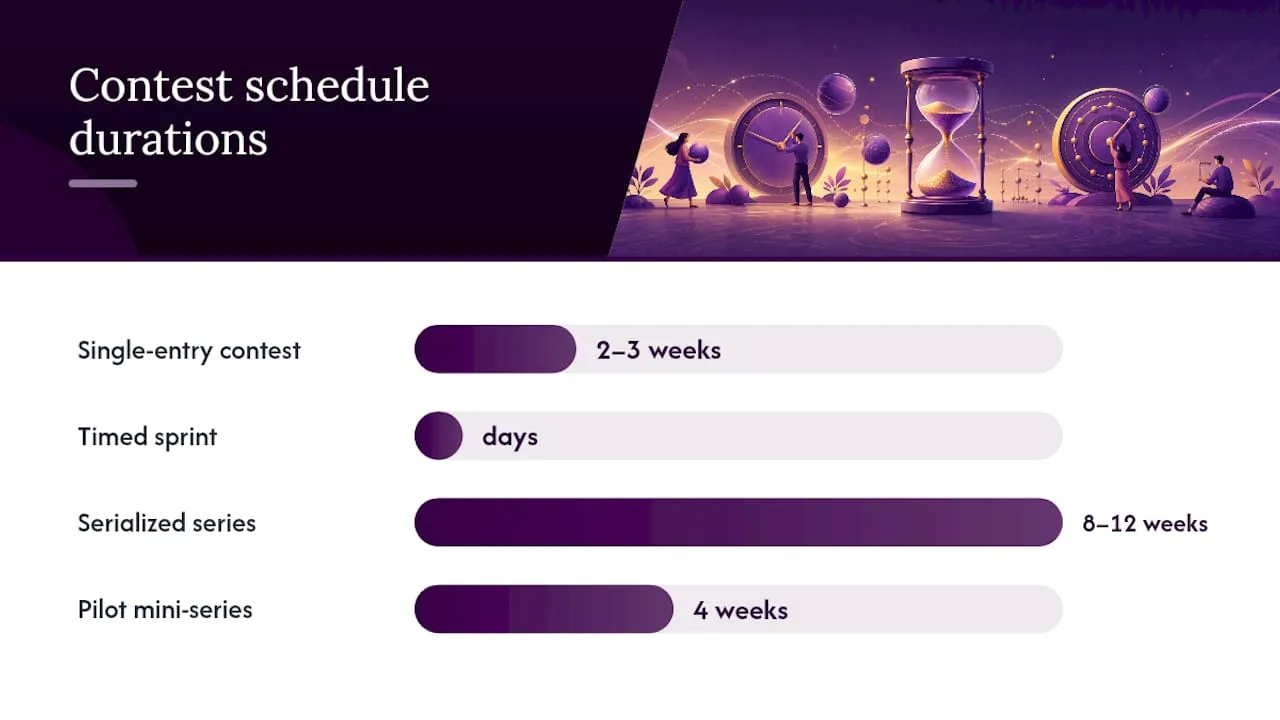
Timelines depend entirely on format. A single-entry themed contest suits a 2 to 3 week window from launch to submission deadline. A timed sprint runs its full lifecycle in days, not weeks. A serialized series needs 8 to 12 weeks to build the prompt, judge, vote rhythm that keeps entrants coming back. If you have never run one before, pilot a 4-week mini-series first. It is short enough to recover from mistakes and long enough to test whether your rubric and voting mechanics actually work.
A judging rubric needs labelled criteria, not a single gut-feel score. This structure works across most formats:
For panel-plus-audience formats, a 70/30 split favouring judges over public vote keeps the result from becoming a pure popularity contest. If you skip judges entirely and run public vote only, expect the most-followed entrant to win regardless of quality.
Rules checklist essentials:
- Eligibility (age, region, one entry per person unless stated otherwise)
- Originality declaration (entrants confirm the work is their own)
- Image quality standards (minimum resolution, no heavy filtering)
- Rights clause covering how you may use submitted images
- Category-specific eligibility, such as contests that require visible use of a sponsor’s product to qualify for a particular prize category, a structure worth copying if you have a sponsor to credit
- Voting window kept short (48 to 72 hours) with one-vote-per-person enforced through email verification to limit ballot stuffing
How to present a winning contest entry
Judges reward entries that document process, not just the finished object. Photograph in natural daylight near a window, never under mixed indoor lighting that skews colours yellow. Take one flat-lay overview shot, then two or three close-up angles showing texture and detail. Include a ruler or your hand in at least one frame for scale, and keep one work-in-progress photo alongside the final image.
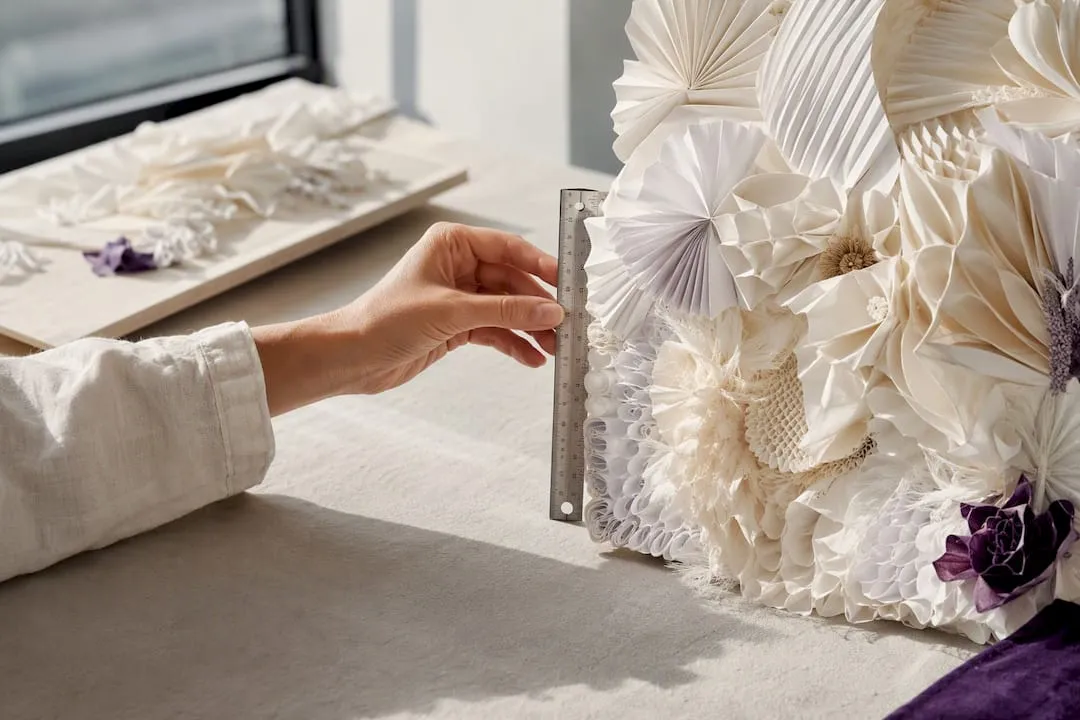
Process notes should run 100 to 300 words: a short inspiration statement, a materials list, and the key technique steps in order. If your entry involves a repeatable pattern, include a small snippet or template excerpt rather than the full instructions.
Most organisers ask for a fairly standard file set at submission:
- Final piece photo (high resolution, JPEG or PNG)
- One or two process/in-progress photos
- Written process notes (materials, technique, inspiration)
- Pattern or template snippet, where applicable
- Completed entry form with eligibility confirmation
Pro Tip: Shoot your final photo against a plain, light-coloured background. Busy backdrops distract judges from the actual craftsmanship, which is exactly what your score depends on.
Prizes and incentives that pull in entries
Cash prizes drive the most entries, but they are not the only lever, and smaller budgets can still produce a strong turnout with the right mix.
- Cash awards for top placements, scaled to entry volume
- Supply bundles or themed mini kits as runner-up prizes
- Editorial features on a blog, newsletter, or social channel
- Paid commissions or short mentoring sessions with an established designer
- Marketplace placement, giving winners a route to sell their design
- Product-sponsored prompts or limited-edition co-branded kits tied to a sponsor
- Free, low-cost recognition: certificates, a featured gallery slot, or a social media badge
Craftsuprint tools that support a contest
Running a contest gets easier when you have ready-made assets to build the brief around. A digital marketplace offers printable craft downloads, mini kits, and tutorial templates you can use directly as a contest prompt, hand out as an entry pack, or gift as a prize. A themed pattern download can become the required starting point for a design-of-the-month contest, and textile and pattern listings work well for fibre challenges. Weekly freebies and community contest tools, alongside a rewards programme, give organisers and entrants a practical way to run, promote, and even monetise entries beyond the contest itself.
Making your contest genuinely inclusive
Diversity in a craft contest starts with the brief, not the promotion. If every prompt assumes access to a die-cutting machine, an embossing folder set, or specialist paper stock, you have quietly excluded entrants who craft with a scissors, glue, and whatever is in the recycling bin. Write at least some prompts around materials almost anyone already owns.
Skill-level tiers help too. Running separate categories for beginner, intermediate, and advanced entrants, rather than one open pool, stops a hobbyist who started crafting last month competing directly against someone who has sold designs for a decade. Judge each tier against its own rubric rather than a single universal standard.
Language and format matter as much as materials. Keep entry instructions short, plain, and free of jargon, and offer a simple written format alongside any video briefing for entrants who prefer reading. Consider timezone spread when setting sprint windows and voting deadlines, since a 24-hour challenge that opens at 9am in one region can quietly shut out entrants twelve hours away.
Finally, look at who actually appears in your promotional images and winner showcases. If every featured entrant looks the same, potential entrants outside that group reasonably assume the contest is not for them. Actively invite entries from different craft traditions, ability levels, and cultural backgrounds when you promote, and feature that range in your winner galleries afterwards.
Getting the word out: promotion that actually fills entries
A contest with no promotion plan gets entries only from people who already follow you closely, which caps your reach before you start. Announce the brief across every channel you already run: newsletter, social media, and any community forum or group tied to your craft niche. Give the announcement at least two weeks of visibility before the entry window opens, so entrants have time to plan rather than scramble.
Social media interaction should be built into the format, not bolted on afterwards. Encourage entrants to post work-in-progress shots using a dedicated hashtag, since these mid-process posts often generate more shares than the polished final reveal, precisely because followers get invested in watching the piece come together. A themed kit tie-in around a current seasonal trend gives you a natural promotional hook, since entrants have a reason to talk about the contest beyond the prize alone.
Recruit a handful of established crafters or small designers to enter early and post about it. Their existing following does more for reach in a week than a generic announcement post does in a month. Cross-promotion with a related community group or a complementary craft niche also expands your entrant pool beyond people who already know your name, and a short reminder push in the final 48 hours before the deadline consistently lifts last-minute entries.
Rules, rights and copyright: what every contest agreement needs
Every contest needs a clear rights clause before a single entry comes in, not after a dispute starts. State plainly whether entrants keep full copyright of their submitted work, or whether the organiser gains a licence to use the images for promotion, and be specific about what that licence covers: social posting, newsletter features, or wider marketing use.
An originality declaration protects both the organiser and other entrants. Require each entrant to confirm the submitted design is their own original work and does not copy a published pattern, another designer’s copyrighted template, or someone else’s contest entry from a previous round. This matters particularly in pattern and paper-craft contests, where templates circulate widely and the line between inspiration and copying can blur fast.
A participant agreement should also cover eligibility rules (age, region, entry limits), how winners will be selected and notified, what happens if a prize goes unclaimed, and a basic liability disclaimer if physical prizes are shipped. None of this needs to read like a legal contract. A single clear page covering rights, originality, and eligibility, agreed to with a checkbox at the point of entry, covers most community-run contests adequately. If your contest involves cash prizes above a modest threshold or commercial sponsorship, it is worth having the rules reviewed by someone with relevant legal experience before launch, since prize competition rules do carry legal weight beyond a simple community activity.
Getting viewers involved even when they are not entering
Not every follower wants to submit a design, but plenty of them will happily vote, comment, or share, and that audience is worth building deliberately rather than treating as a side effect of the contest.
A live voting gallery, updated as entries arrive rather than revealed all at once at the deadline, keeps people returning to see what’s new.
Comment prompts work better than a bare “vote here” call. Ask viewers to guess the technique used, name their favourite colour combination, or predict the winner, and you turn a passive scroll into an active discussion thread. Behind-the-scenes content, short videos or photo series showing entrants at work, gives non-entrants something to share even when they have no piece of their own in the running. A dedicated contest hashtag makes this content easy to find and easy to reshare, and it means the social sharing habits crafters already have do a good chunk of your promotional work automatically.
Author perspective: quick lessons from running craft challenges
Keep the brief tight and measurable, or judging turns subjective fast. Balance judge expertise against audience voting so a popularity contest never masquerades as a design competition. And pilot a short series before committing to a long season.
— Rob
Where to find downloads, kits and templates for your contest
If you are building a contest brief right now, you do not need to start from a blank page. Craftsuprint gives you an alternative to designing every prompt and prize from scratch: ready-made printable downloads, themed mini kits, and tutorial templates you can drop straight into a contest brief or use as an entry pack.
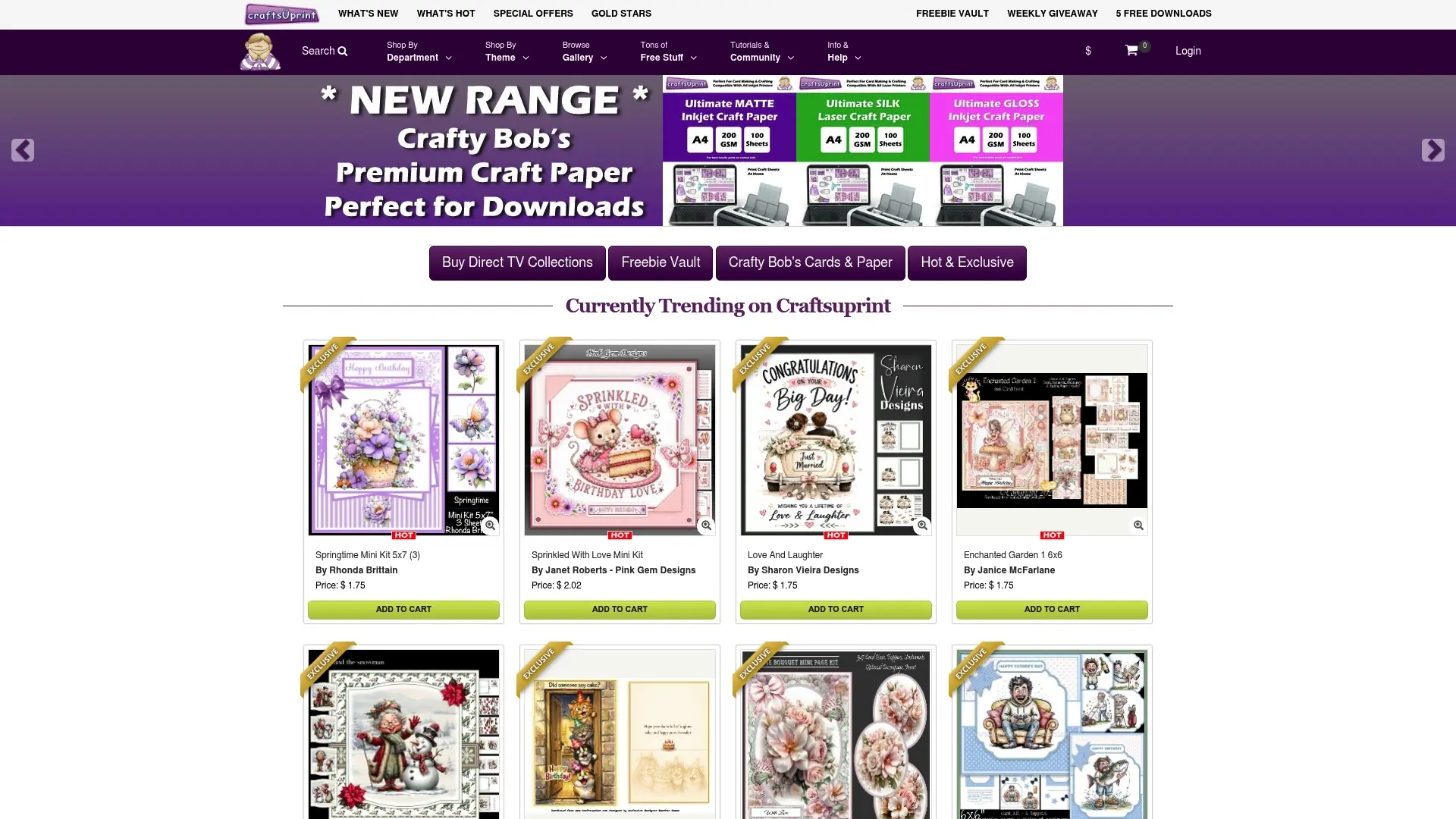
The Create & Craft Downloads hub is worth browsing first if you want a themed kit to anchor a design-of-the-month or seasonal contest, since each category groups designs by occasion and style. For pattern-led contests, paper craft listings give you templates entrants can build variations from, and the FREE Create and Craft Members Gift is a genuinely useful giveaway to offer as a low-cost entry incentive without touching your prize budget. If you are organising a materials-based challenge and want a starting resource pack, the Create & Craft Download page has guide downloads you can hand entrants as a briefing document. Have a look through what fits your theme, and build your brief around it.
Selected contest rules and example programmes to read next
Three worth studying for their submission structure: the STAEDTLER International Creative Challenge for category-based eligibility, the Stage72 ‘Crafted in 72’ challenge for sprint timing, and the Great Tennessee Yarn Tour pattern contest for pattern submission formatting.
Sources
- STAEDTLER International Creative Challenge 2026
- Stage72 ‘Crafted in 72’ art challenge (example of time-limited model)
- Great Tennessee Yarn Tour — 2026 pattern contest
FAQ
What are good topics for a craft competition?
Seasonal themes, colour-constraint briefs, upcycled-materials challenges, and single-stamp or single-die contests all work well because they give entrants a clear starting point without dictating the outcome.
What are good ideas for art and design contests generally?
Timed sprints with a surprise theme, serialized weekly prompt series, and materials-limited briefs translate well from craft into broader art and design competitions, since all three balance creativity against a fair constraint.
What craft ideas are trending right now?
Paper-craft maximalism, mini-kit tie-in contests, and pattern-book submission formats are all gaining traction, particularly where a themed kit doubles as the contest brief itself.
What are good themes for a drawing or design contest?
Colour-limited palettes, a single fixed subject with open interpretation, and short timed sprints all suit drawing and design contests, since they test creativity within a clear, judgeable boundary.
How long should a craft contest run?
A single-entry themed contest suits 2 to 3 weeks, a sprint runs 24 to 72 hours, and a serialized series works best over 8 to 12 weeks with weekly prompts and short voting windows.